.png)


.jpg)
.jpg)
.jpg)
.jpg)
.jpg)
.jpg)
.jpg)
.jpg)
.jpg)
.jpg)
.jpg)
.jpg)
.jpg)
.jpg)
.jpg)
.jpg)
.jpg)
.jpg)
.jpg)
.jpg)
.jpg)
.jpg)
.jpg)
.jpg)
.jpg)
.jpg)
.jpg)
.jpg)
.jpg)
.jpg)
.jpg)
.jpg)
.jpg)
.jpg)
.jpg)
.jpg)
.jpg)
.jpg)
.jpg)
.jpg)
.jpg)
.jpg)
.jpg)
[ B i o ] [ W o r k s ]
[1924 - 2016]
David Crown, was director of the International Mezzotint Society. Born in London, England and educated at Cambridge University, the University of London and the London Hospital Medical School, he became a physician in 1947
and moved to Rochester, NY in 1948. He practiced internal medicine until 1982 when he retired. This enabled him to pursue full-time his “other career as an artist.” In 1983 he moved to Gainesville, Florida.
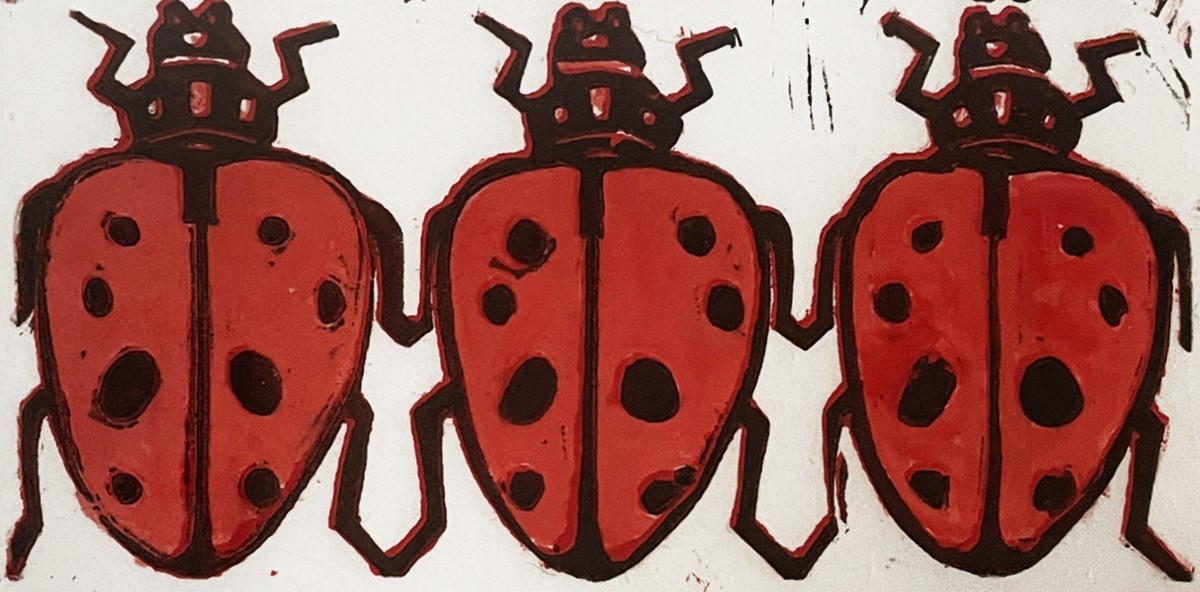
Dr. Crown worked in many different types of media: mezzotints, woodblocks, etchings and collographs, oil painting, and sculpture in steel, aluminum and bronze. He conducted workshops and demonstrations, and gave lectures on the history of printmaking and on a variety of printmaking topics and techniques.
He was awarded a residency for printmaking at the prestigious Frans Masereel Center in Belgium. His works are in numerous collections across America, Canada, Japan and Europe.
After David’s many years practicing medicine he returned to his first love, art. While his techniques were varied, many themes reoccurred over the years. The iconography is not as diverse as it would appear. There are still-lifes, mothers and children, animals, whimsies, serious subjects, and some images best characterized as weird.....
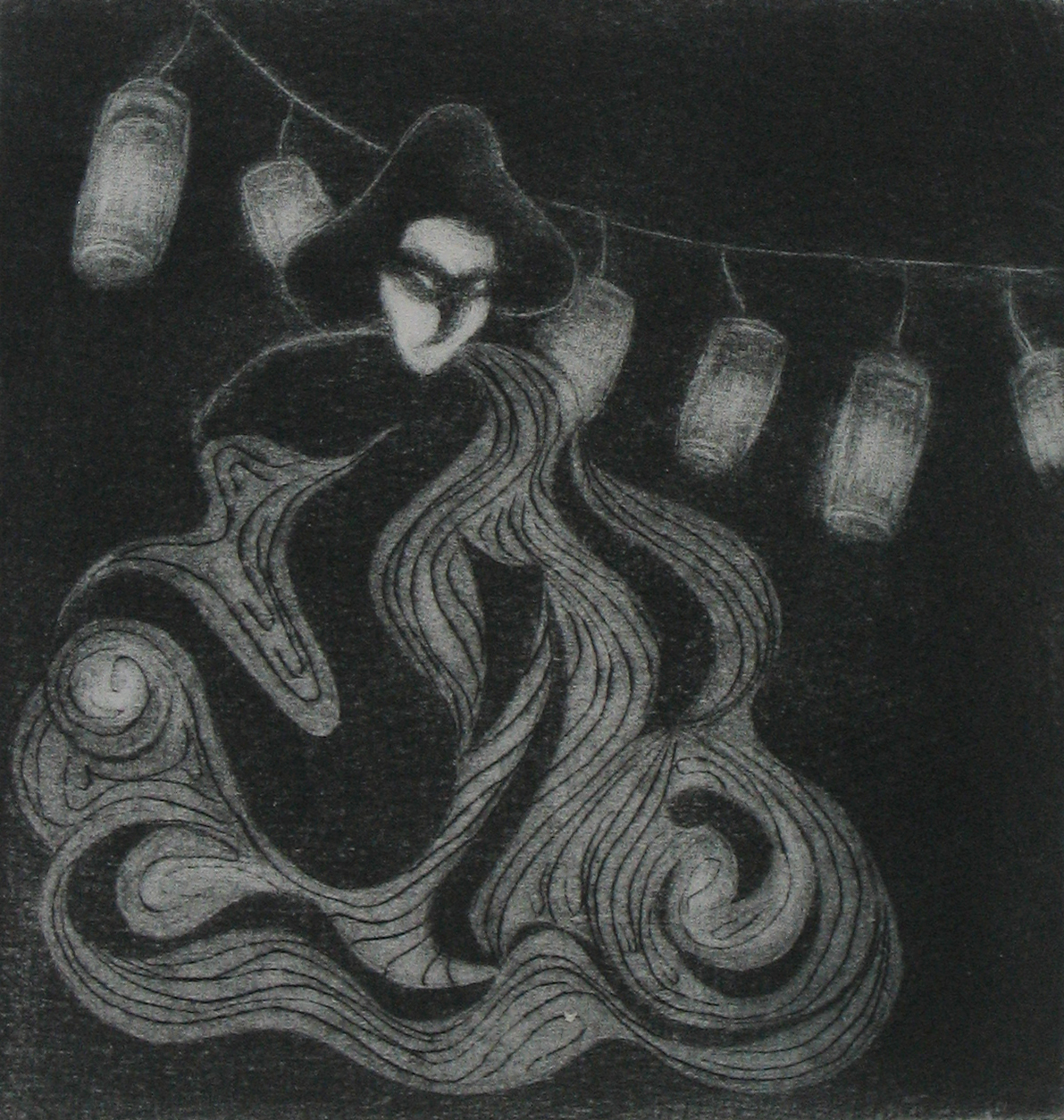
Crown’s MEZZOTINTS vary from small black and white to 9"x12" three and four-plate color. Some of his mezzotints were created in the classical manner, others may be created with a rocker alone without burnishing. Some incorporate dry point, rouleau, masks, etc., and in some cases four or more plates with multiple passes through the press. The technique he used was rocking the plates and printing them himself in small editions that rarely exceed 25.
In 1997 he founded the International Mezzotint Society which now numbers more than 90 members internationally. He taught mezzotint techniques, lectured at various institutions, gave demonstrations of his own methods to individuals and groups of printmakers. He also had articles published in the "Journal of the Print World" and "Printworks" in England.
.jpg)
[ B I O G R A P H Y ]
[1924 - 2016]
David Crown, was director of the International Mezzotint Society. Born in London, England and educated at Cambridge University, the University of London and the London Hospital Medical School, he became a physician in 1947
and moved to Rochester, NY in 1948. He practiced internal medicine until 1982 when he retired. This enabled him to pursue full-time his “other career as an artist.” In 1983 he moved to Gainesville, Florida.
Dr. Crown worked in many different types of media: mezzotints, woodblocks, etchings and collographs, oil painting, and sculpture in steel, aluminum and bronze. He conducted workshops and demonstrations, and gave lectures on the history of printmaking and on a variety of printmaking topics and techniques.
He was awarded a residency for printmaking at the prestigious Frans Masereel Center in Belgium. His works are in numerous collections across America, Canada, Japan and Europe.
After David’s many years practicing medicine he returned to his first love, art. While his techniques were varied, many themes reoccurred over the years. The iconography is not as diverse as it would appear. There are still-lifes, mothers and children, animals, whimsies, serious subjects, and some images best characterized as weird.....
Crown’s MEZZOTINTS vary from small black and white to 9"x12" three and four-plate color. Some of his mezzotints were created in the classical manner, others may be created with a rocker alone without burnishing. Some incorporate dry point, rouleau, masks, etc., and in some cases four or more plates with multiple passes through the press. The technique he used was rocking the plates and printing them himself in small editions that rarely exceed 25.
In 1997 he founded the International Mezzotint Society which now numbers more than 90 members internationally. He taught mezzotint techniques, lectured at various institutions, gave demonstrations of his own methods to individuals and groups of printmakers. He also had articles published in the "Journal of the Print World" and "Printworks" in England.