[ B i o ] [ W o r k s ]
[ S T A T E M E N T ]
I have been weaving for nearly fifty years. When I first began, it felt like I had come home, at last. It felt familiar and “right”.
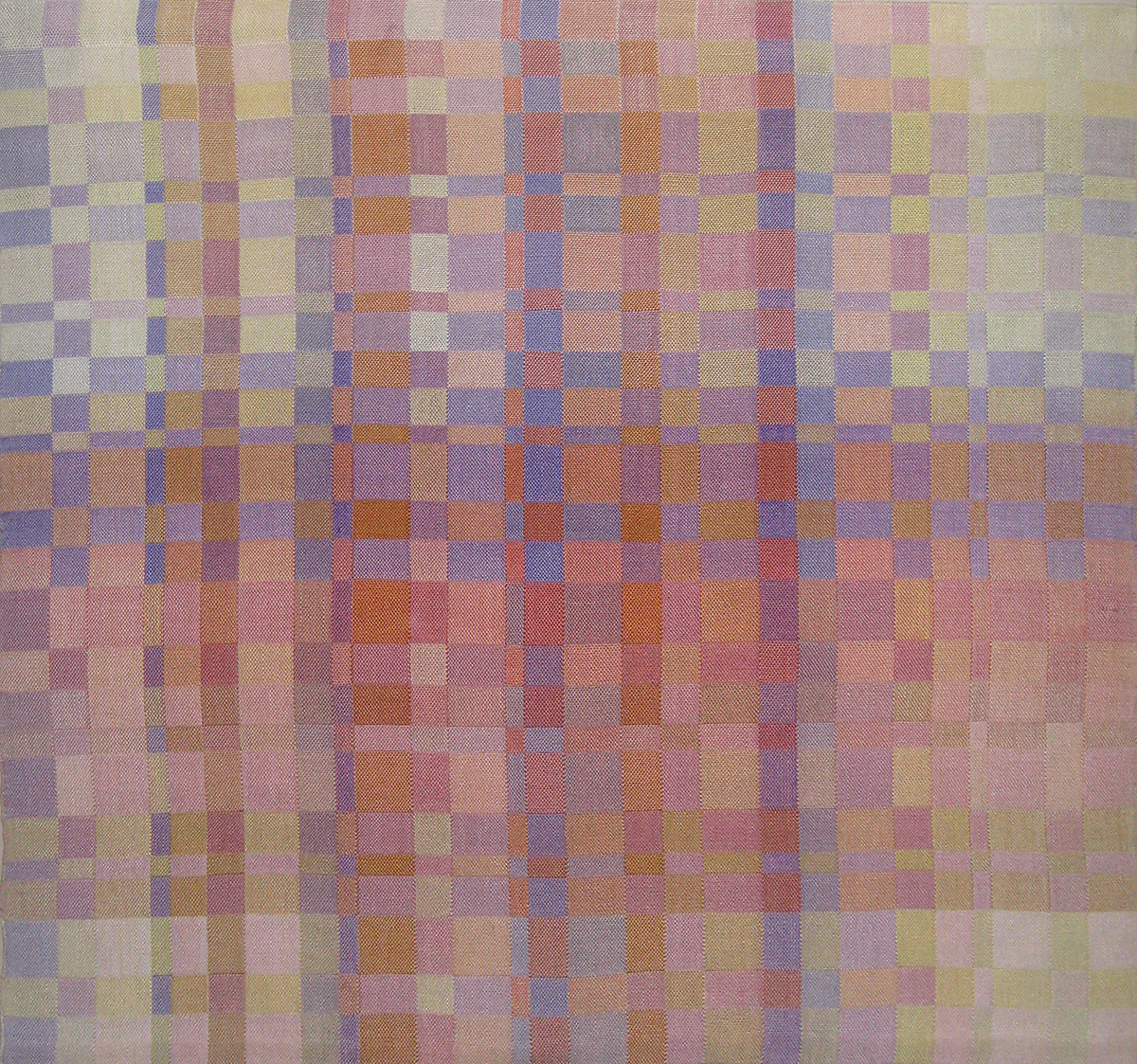
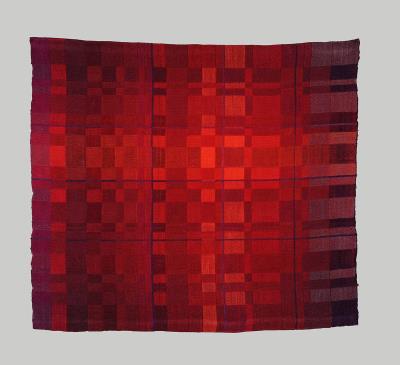
My passion is color. As long as there is light enough for the cones in my eyes to work, I am entertained. (Have you ever looked at walls painted the same color and noticed that in the corner the color changes a little bit? I have!)
Nature is a constant source of color inspiration. I have woven about Zion, Bryce, the Northern lights in January in Fairbanks, AK. Sometimes I kneel on the grass in my garden so I can look closely to see all the colors that are there. When I travel, I take my cotton color charts with me along with a notebook; I record where I was, the time of year, and time of day and record the numbers and names of the colors I see. Proportion as well as color goes into that notebook. When I come back to my studio, I can pull out the notebook and create an abstraction of what I saw.
The first step in making a piece involves my selecting the spools or tubes of cotton sewing thread and putting them into a shallow box. I put that box where I will walk by it often, and almost each time I pass it I rearrange the colors and sometimes take on out and put another in. This process takes about a month.
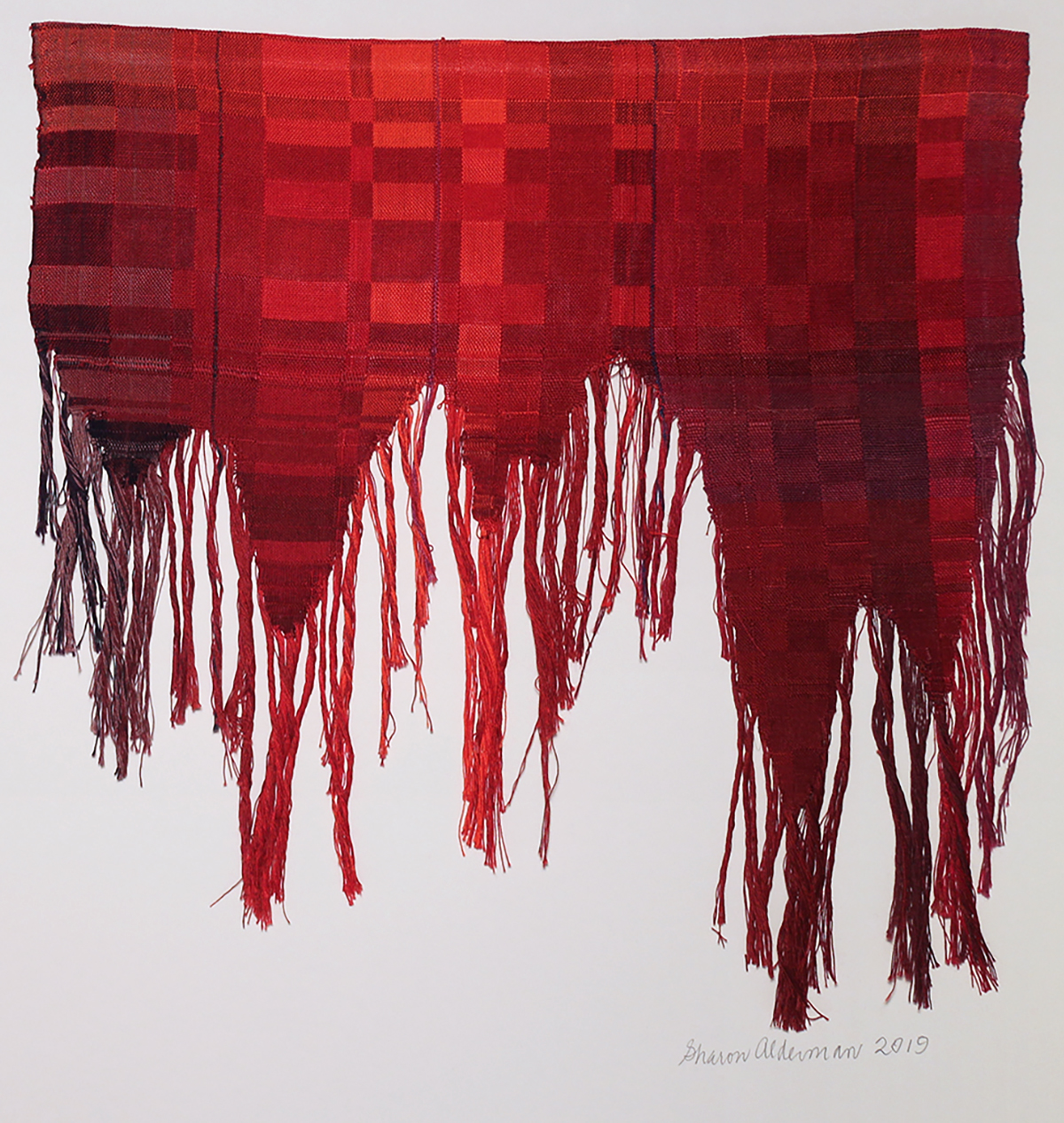
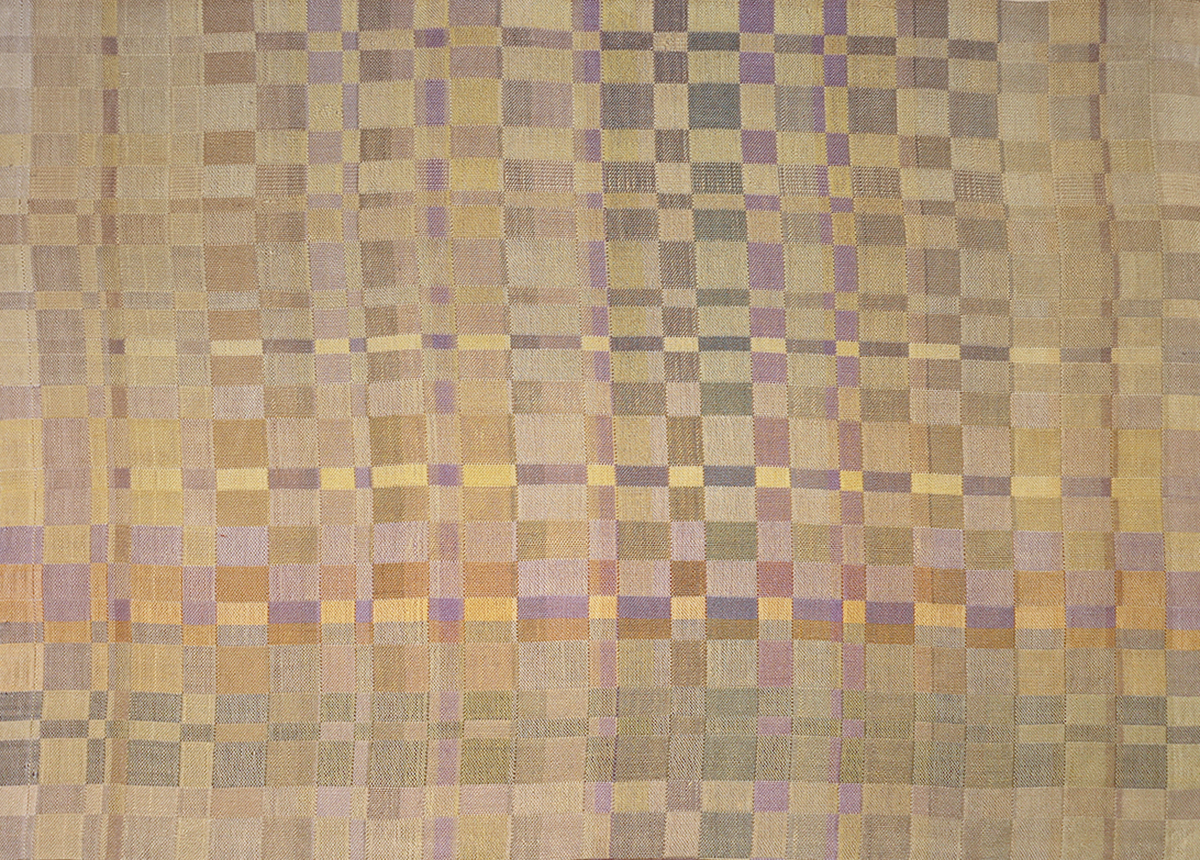
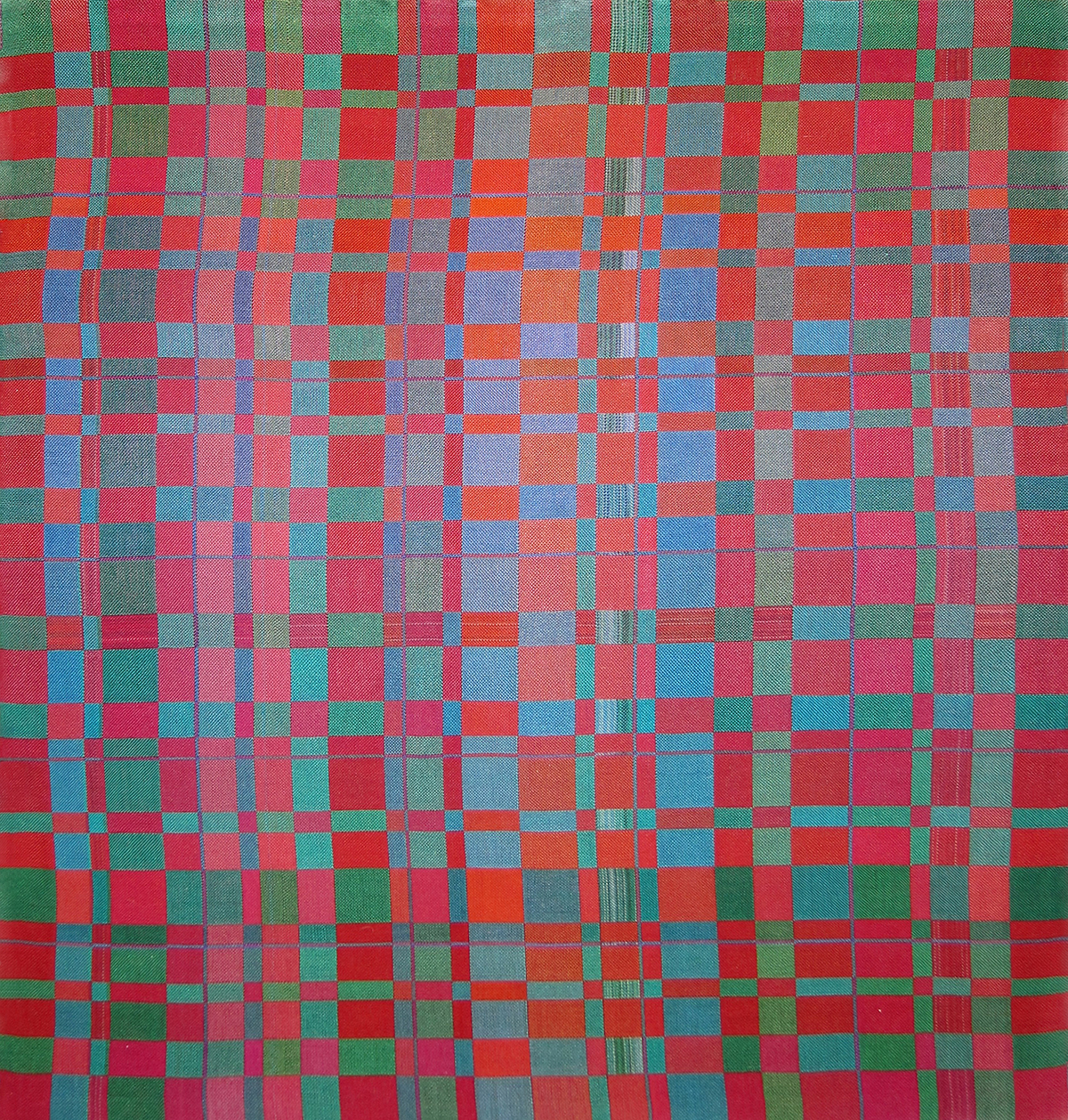
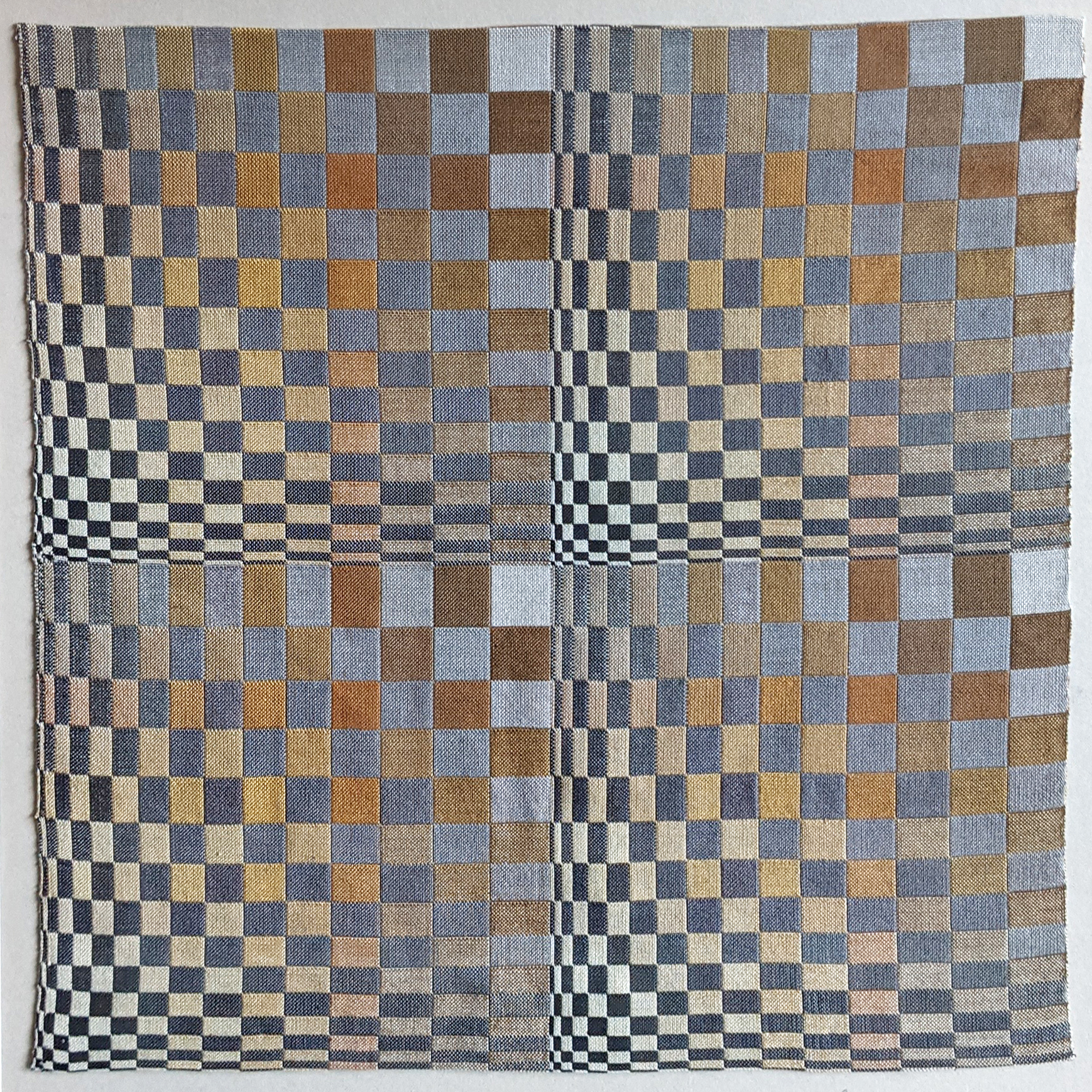
When the arrangement has “jelled” I start to measure out the warp (the threads that run front to back on the loom). Measuring out the warp takes at least two days. There are about a hundred threads across the loom and those are crossed at the same density. The pieces (except those with leaf skeletons woven into silk–more about that later) are made of cotton sewing thread, the same stuff you use to sew in a button. There are two layers of cloth everywhere. The color in the warp on the lower layer can’t be seen from the front of the piece but I can bring it to the surface later on in the weaving. It takes throwing two shuttles across to get one thread ahead. If I put a color in the warp that I want to hide until the right moment, I can cross it with a color that almost neutralizes it.
Nothing happens fast!
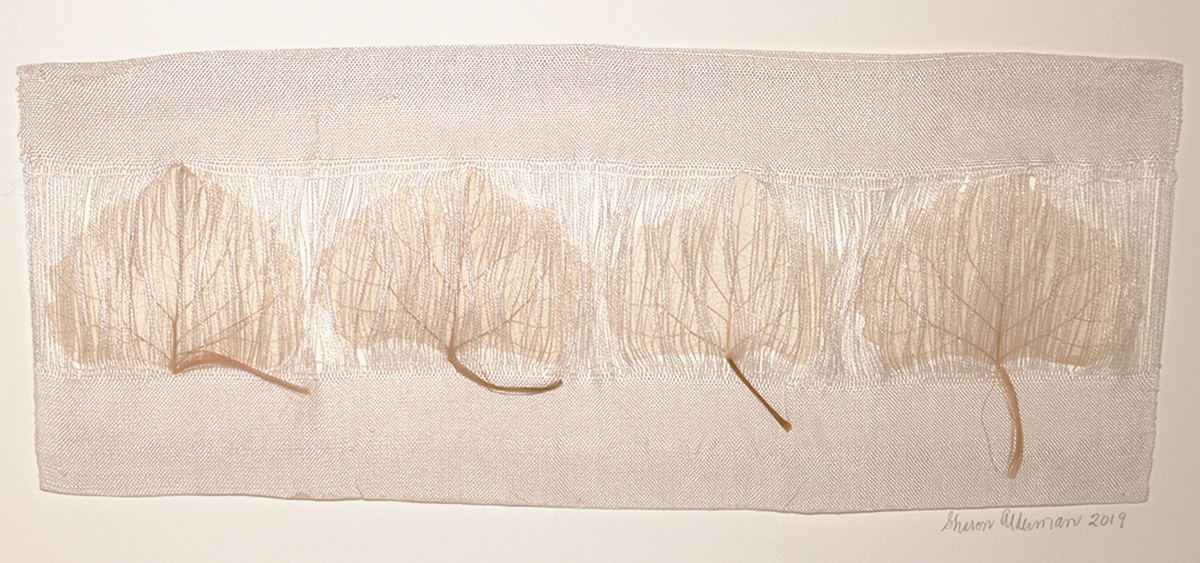
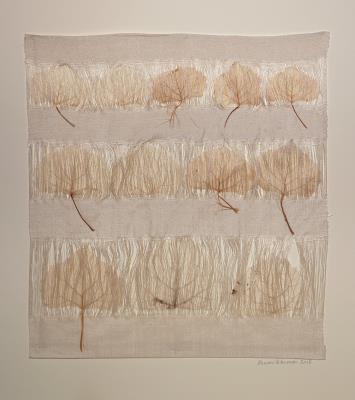
The pieces with leaf skeletons in them are woven into fine silk. The leaves themselves come from the cottonwood tree in my front garden. It was planted in 1859 by Peter Beck Hansen who was given the chore of foresting the valley by Brigham Young. I doubt that he knew he was planting over an artesian water system (I have the rights to the water from the well as long as I don’t use it for culinary purposes) which accounts for its great age. I gather the leaves in the autumn when they fall from the tree. It takes at least a year for them to skeletonize. I can tell you what I tried and what finally worked, if you like.
.png)


.jpg)
.jpg)