[ B I O G R A P H Y ]
1 5 B y t e s . c o m / D e n i s P h i l l i p s
DENIS PHILLIPS written by Jane Connell
“I’ve never really known a time in my life,” Denis Phillips muses, “when one way or the other, I was not pursuing art and music.” His parents and grandparents were musicians. His grandmother has a piano and, during frequent visits, he copied illustrations by N.C. Wyeth from books she had. Making drawings and playing musical instruments, nurtured in his youth, are prevailing constant today. Besides maintaining a spacious room for painting, Phillips has dedicated a considerable area of his Salt Lake City studio to an array of electronic musical equipment – a piano and synthesizer, guitars and chimes, a multi-tract tape recorder and more. Here, art and music inform one another in a variety of contexts and media.
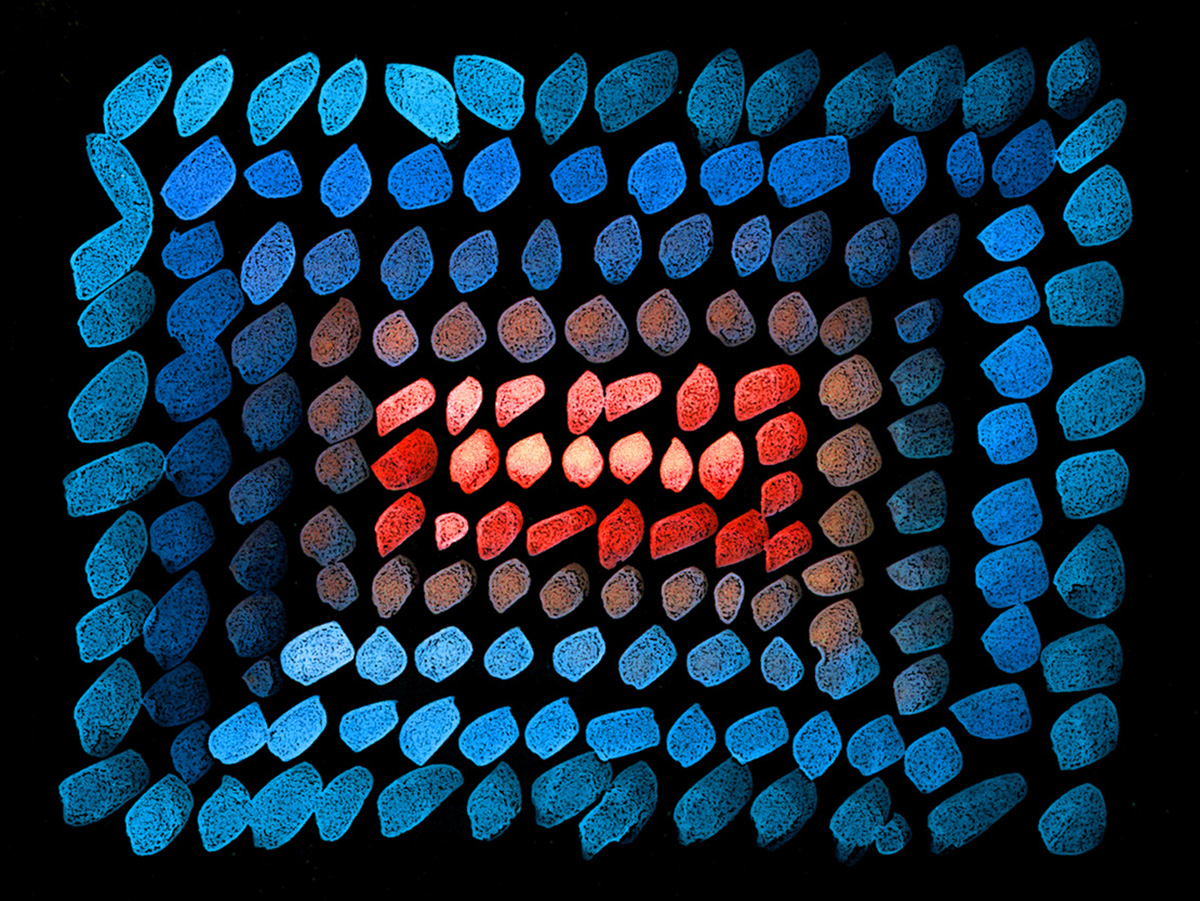
Improvisation is at the heart of Phillips’ creativity. Whether he is exploring combinations of sounds and rhythms or compositions of color and form, the range of his artistic expression is defined by the energy of the moment. As an artist, he moves effortlessly from oil and acrylic to watercolor, from sketching and plein air painting to working in the studio from memory, and from intuitive abstractions and realistic rural scenes to abstracted forms of landscape. “I like it all,” Phillips says.
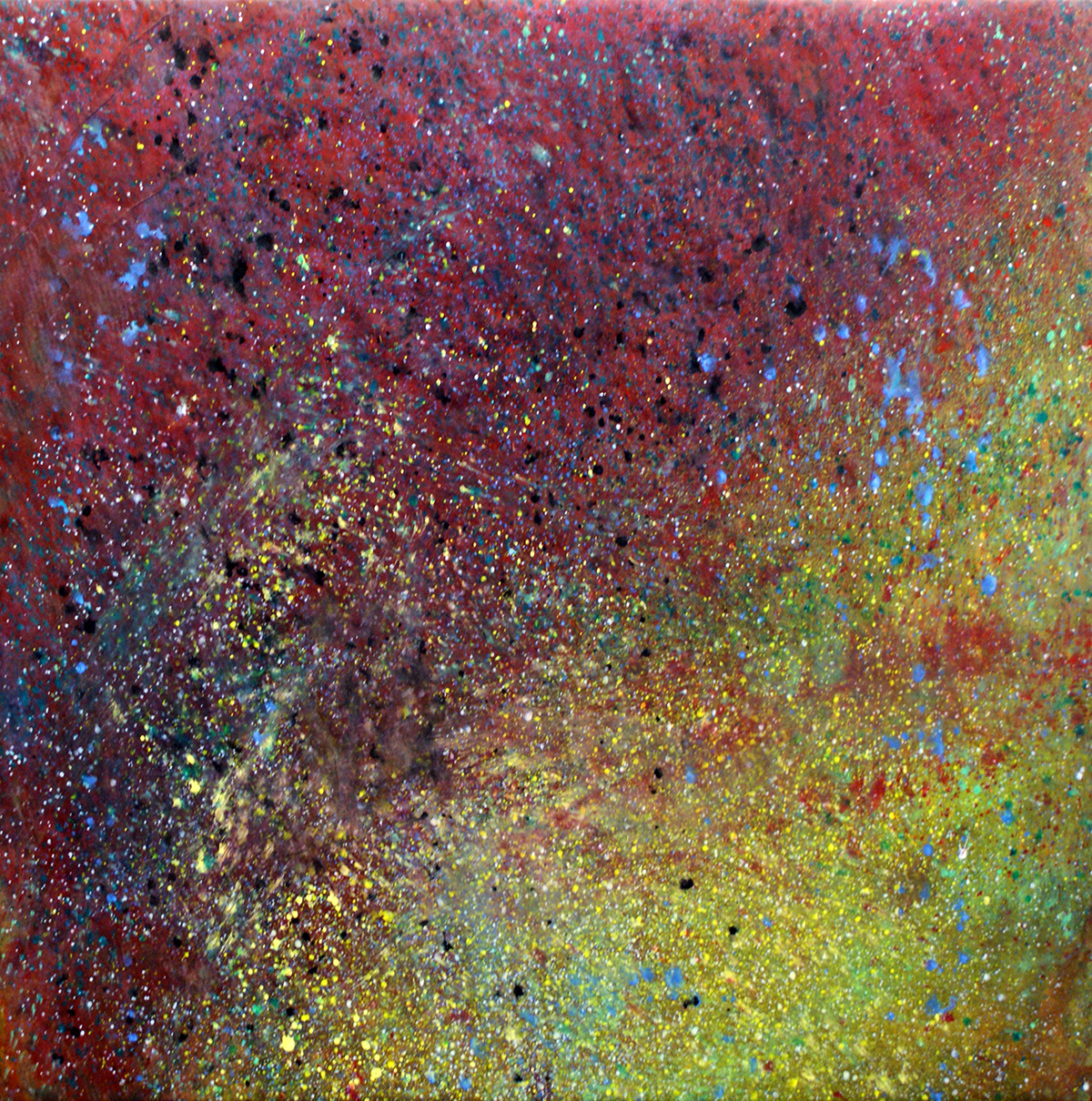
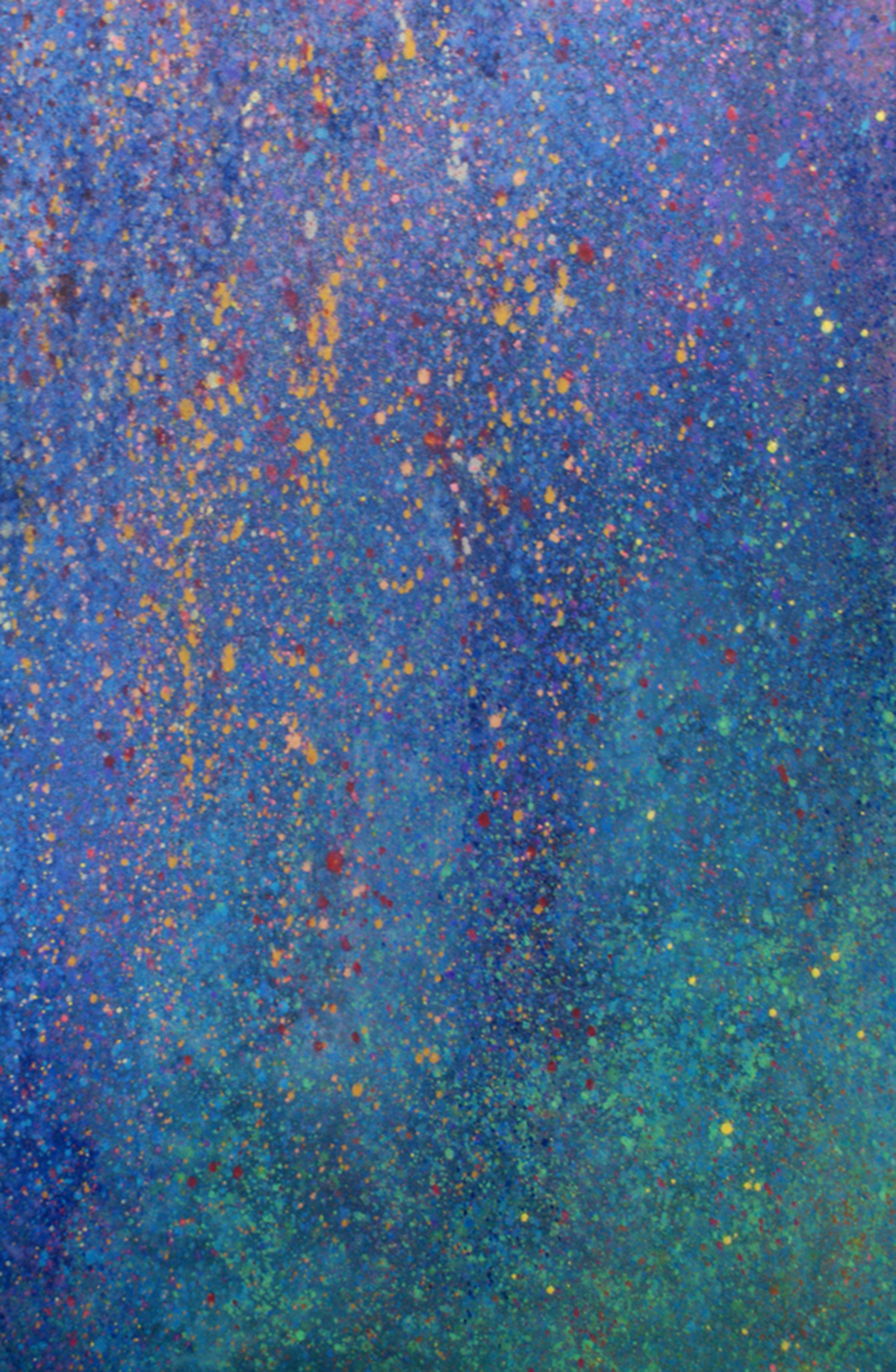
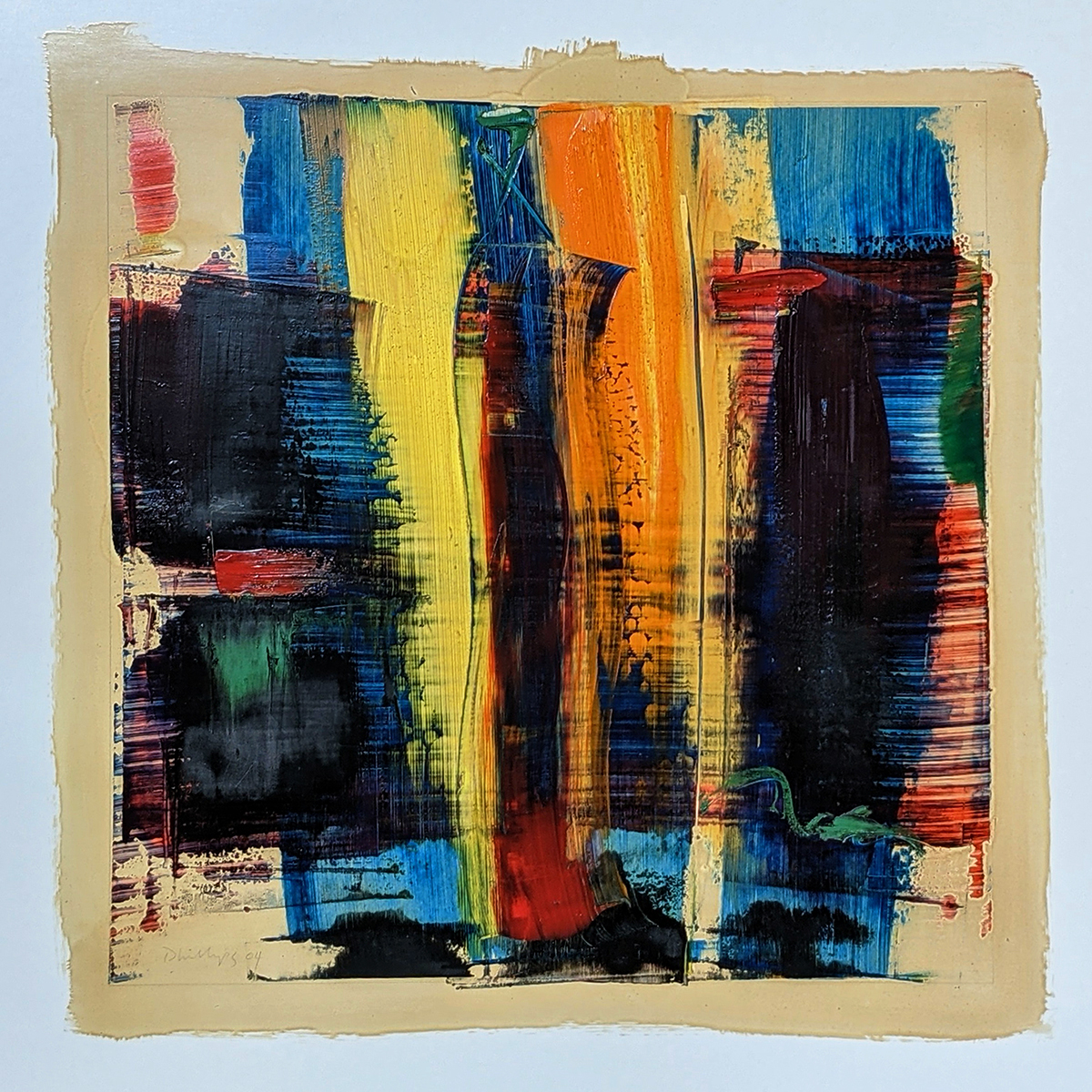
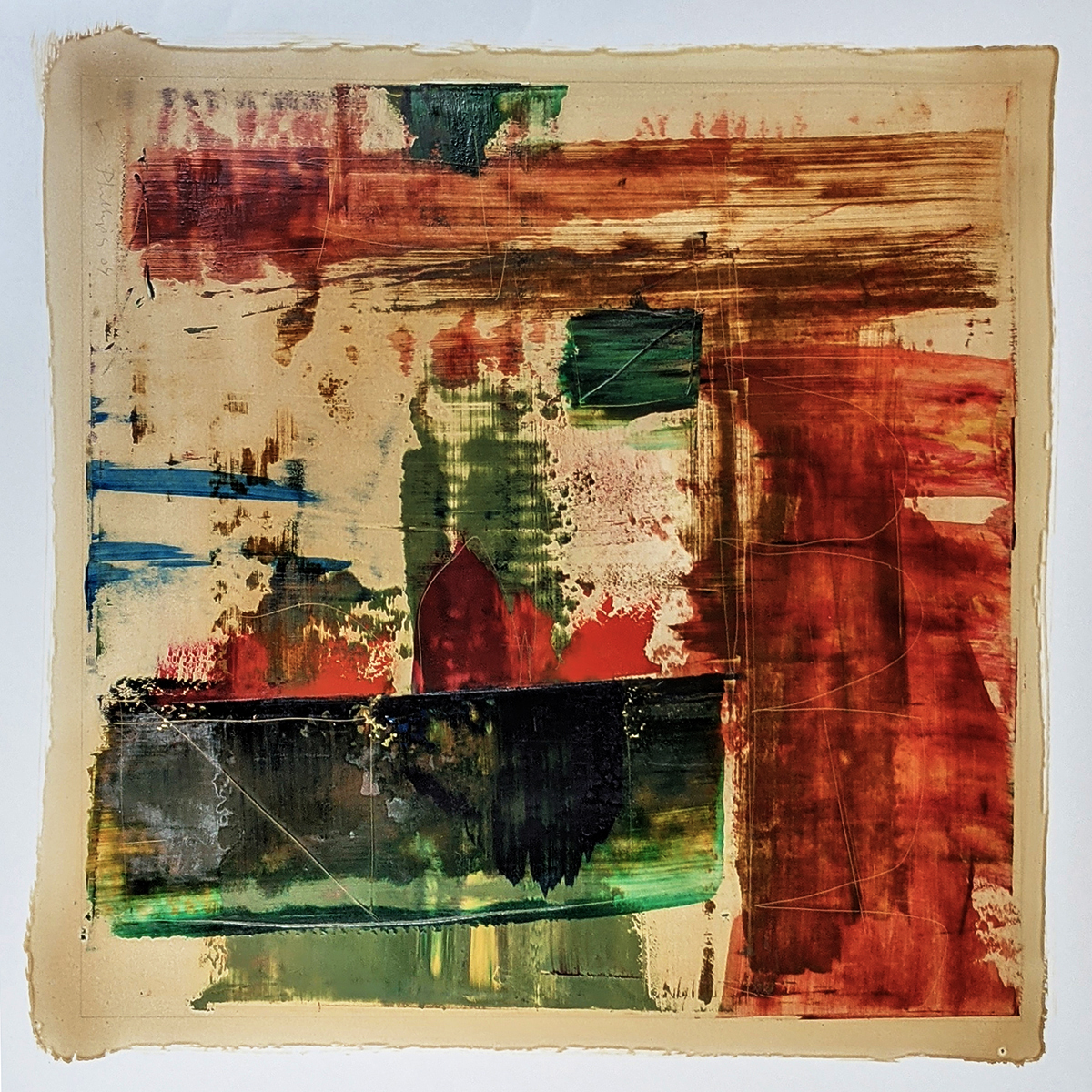
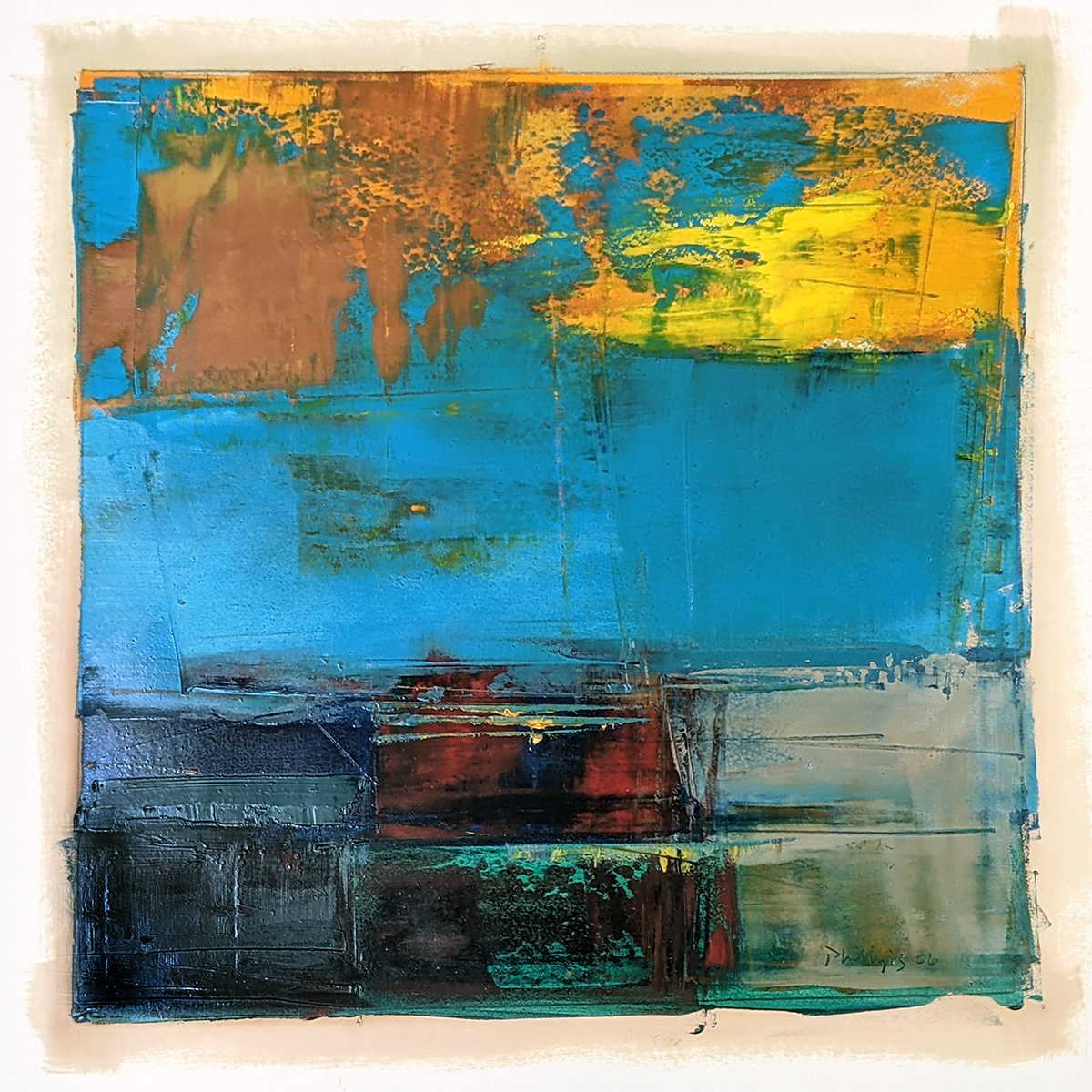
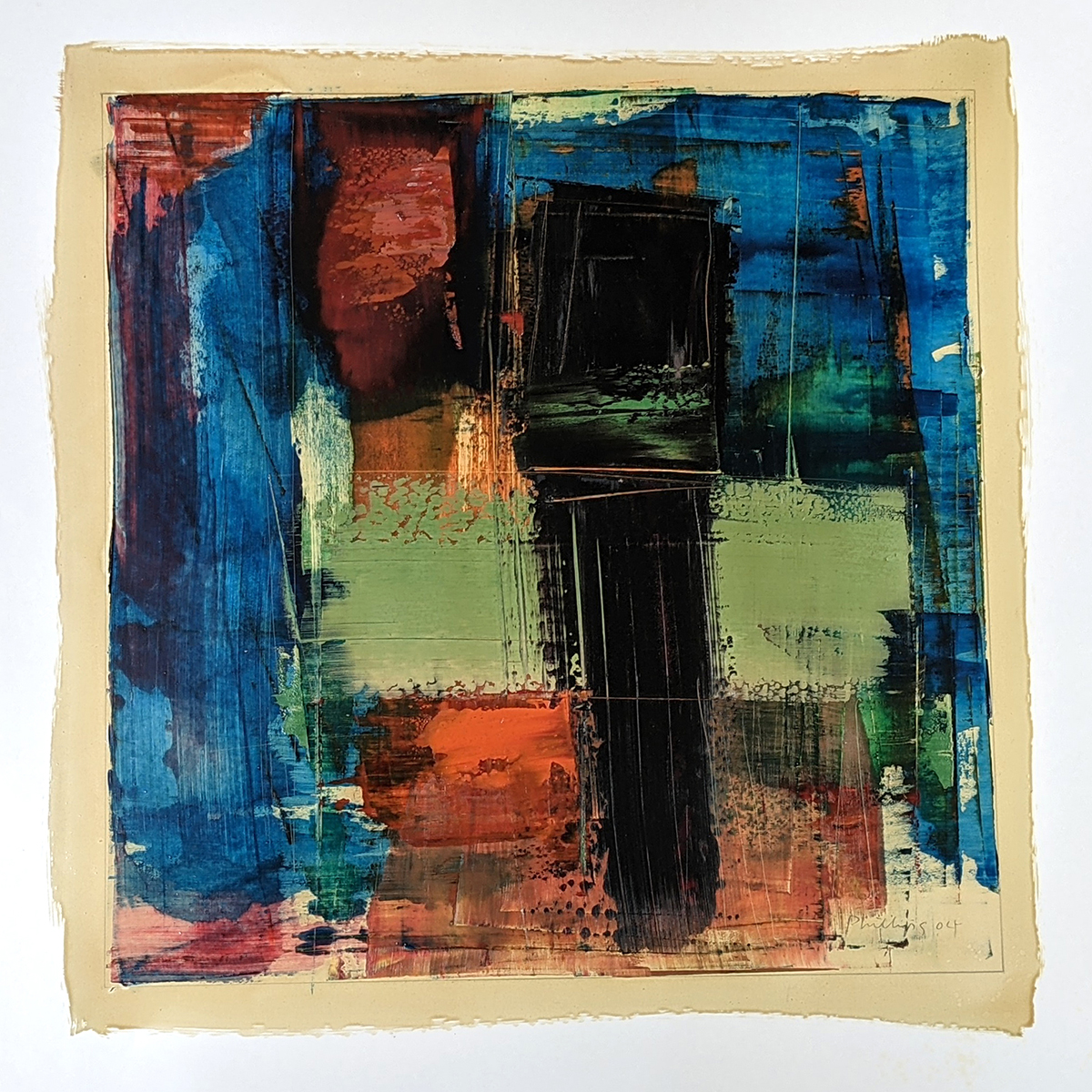
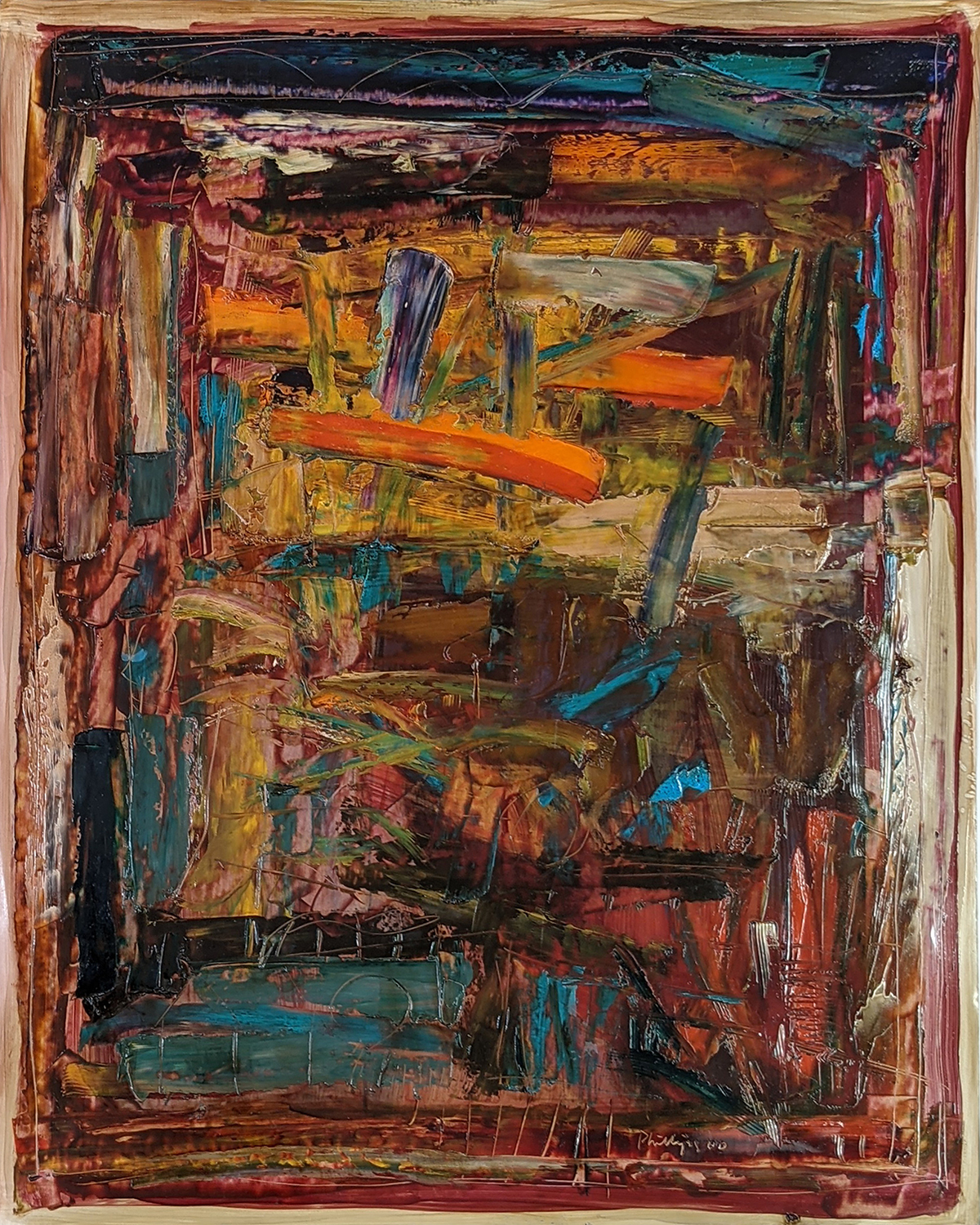
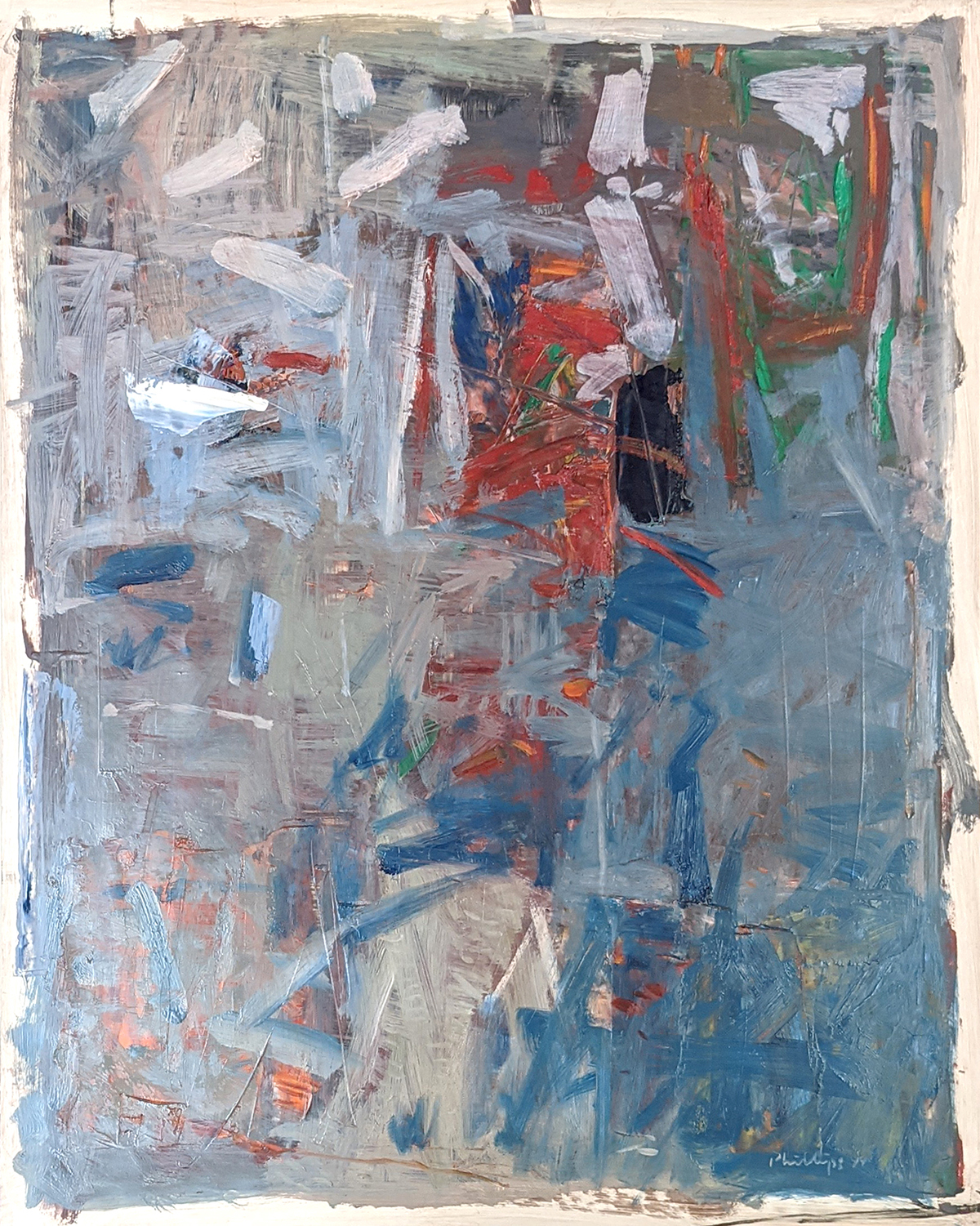
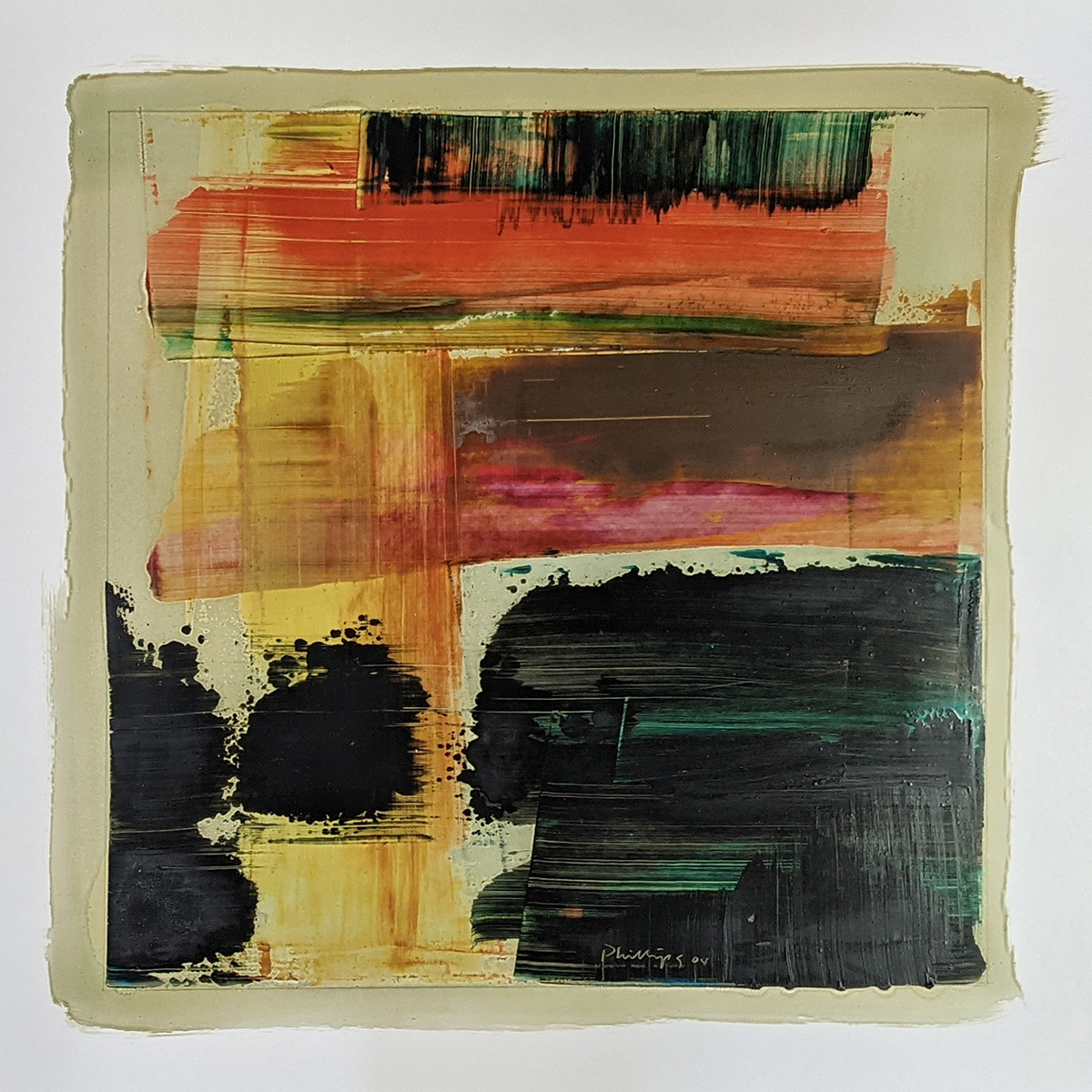
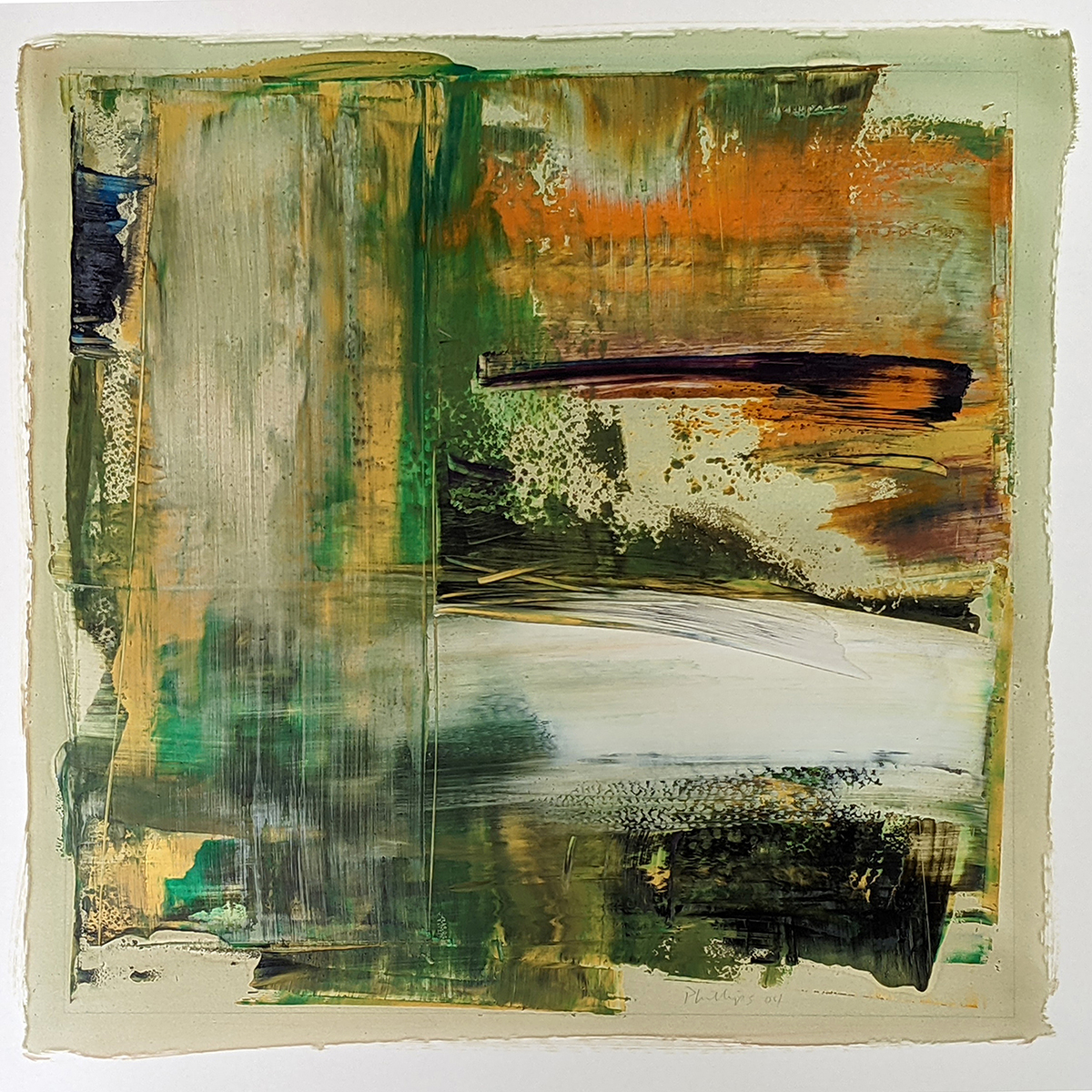
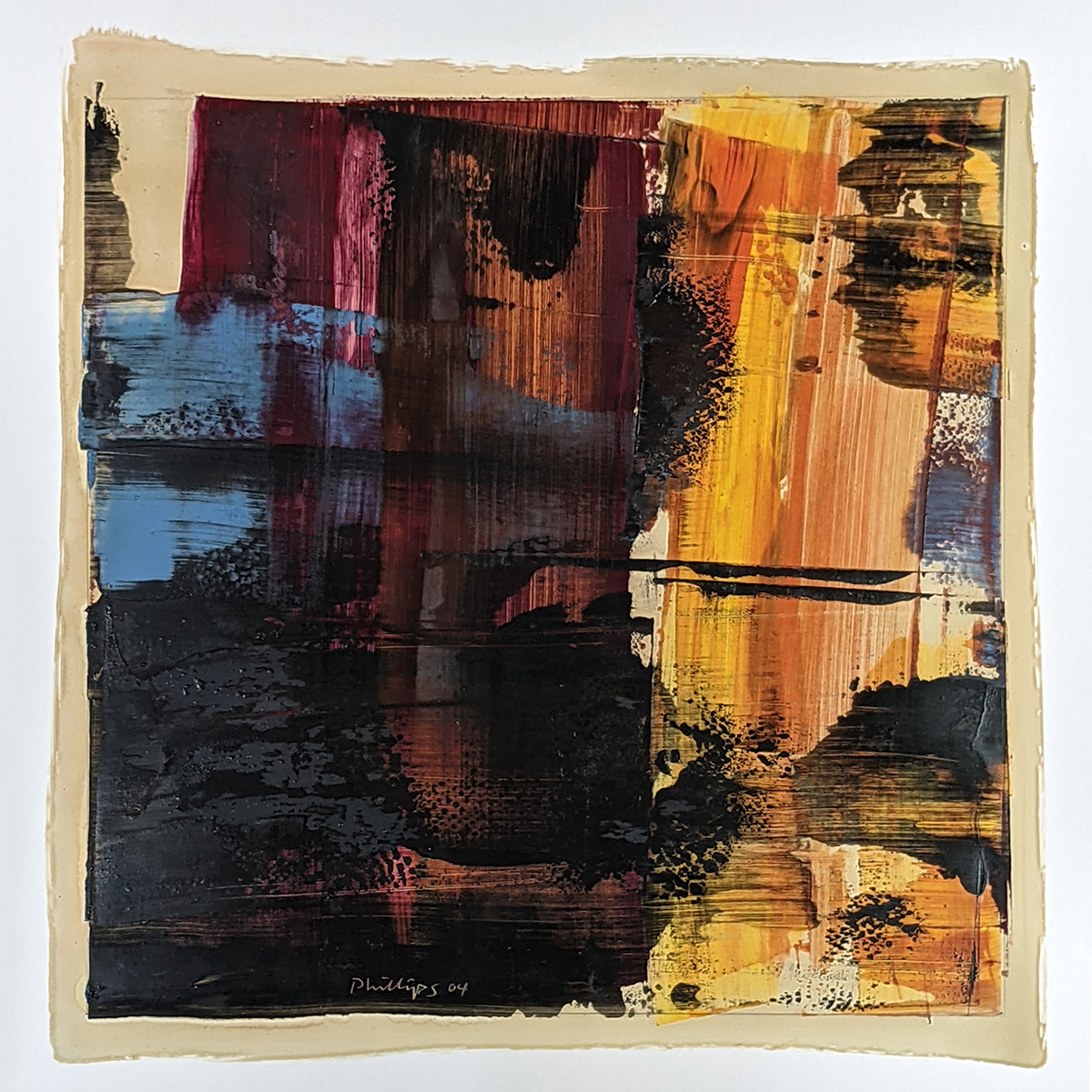
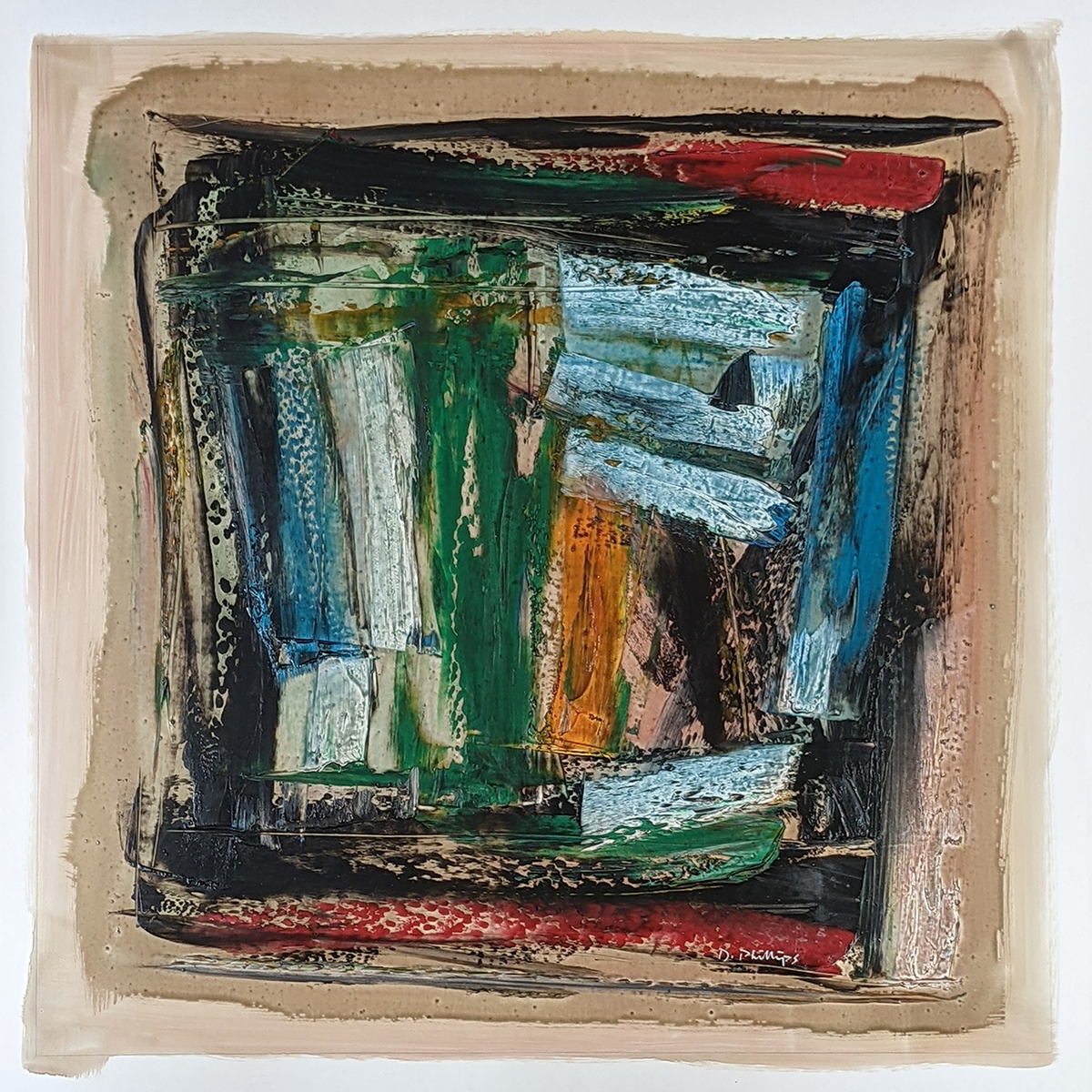
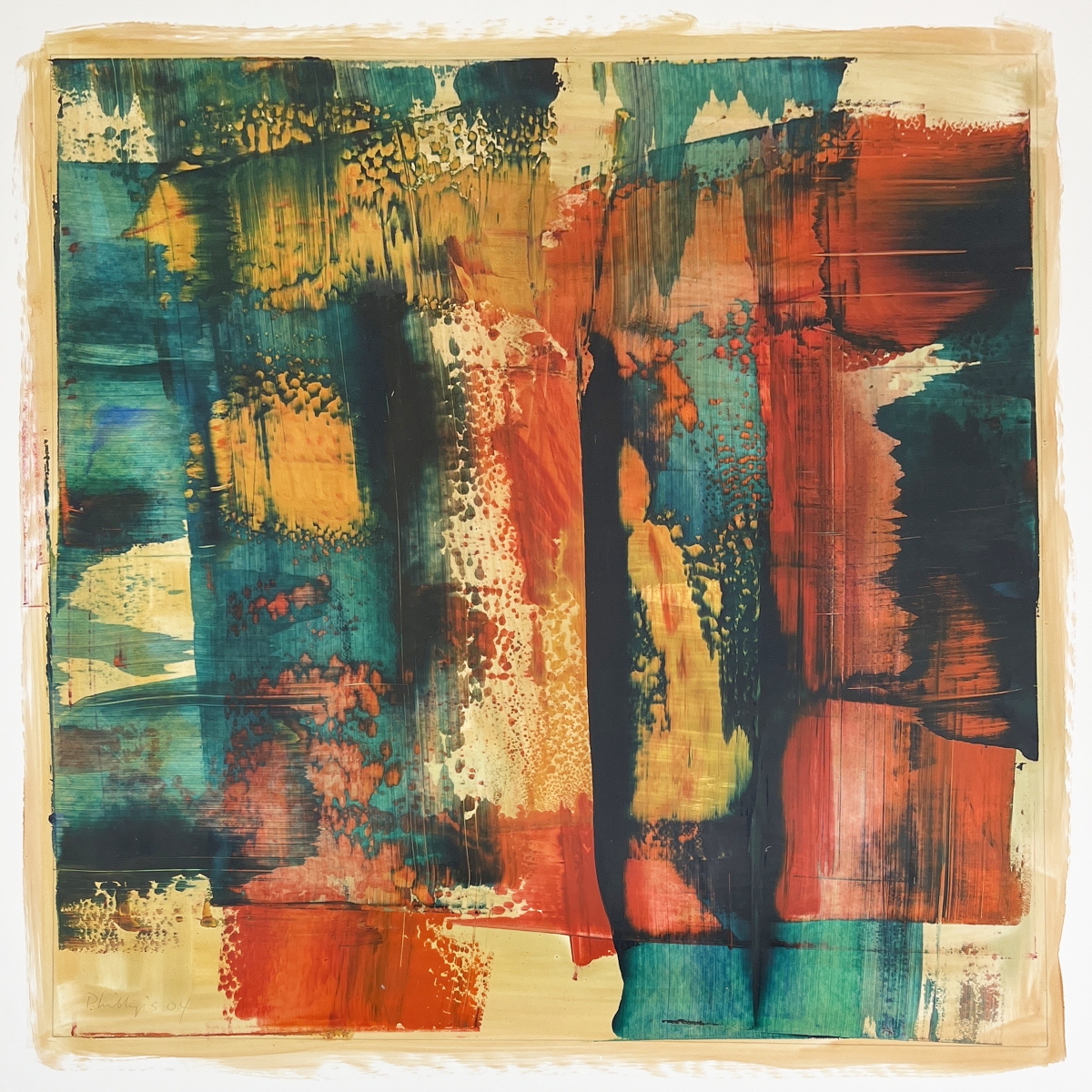
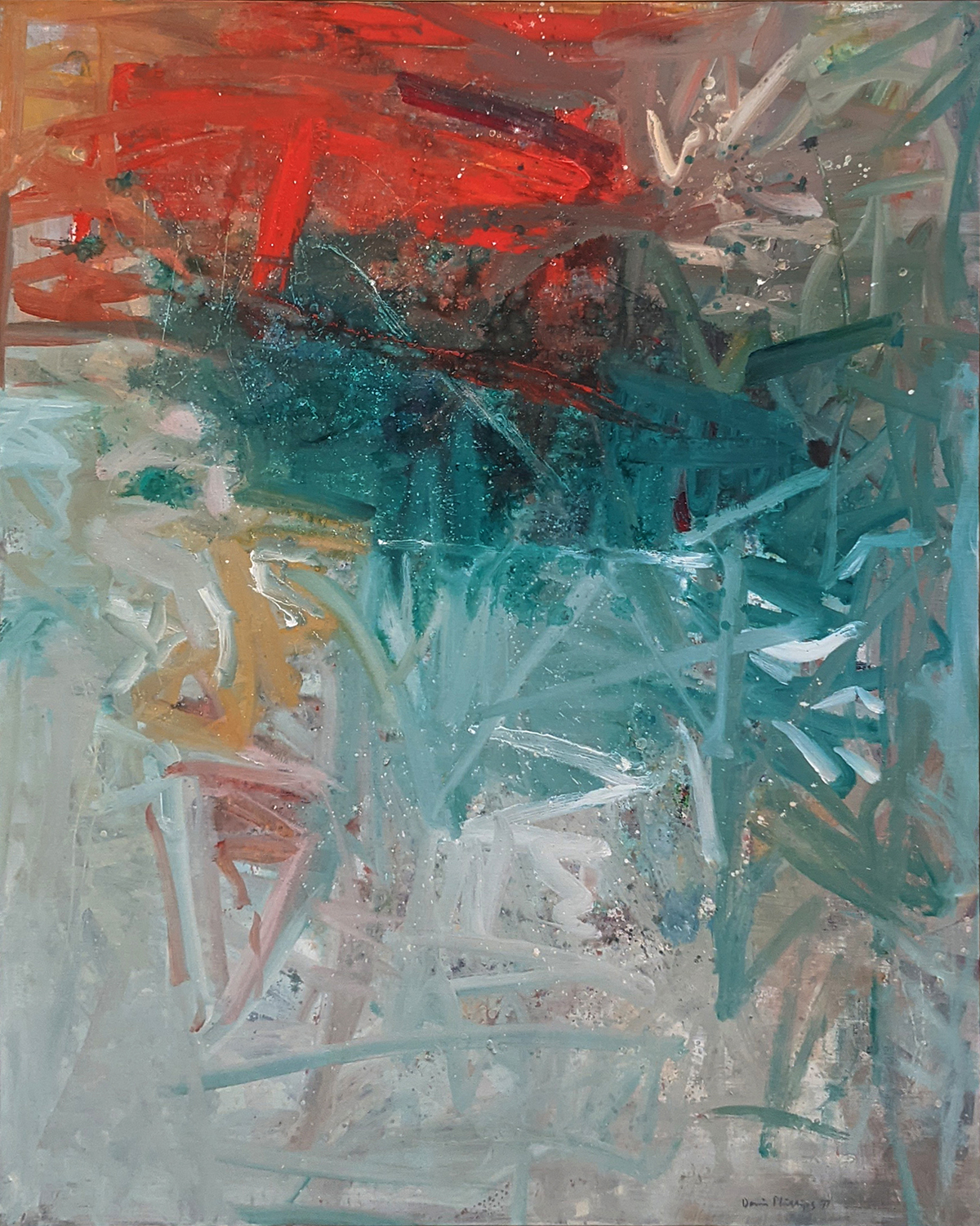
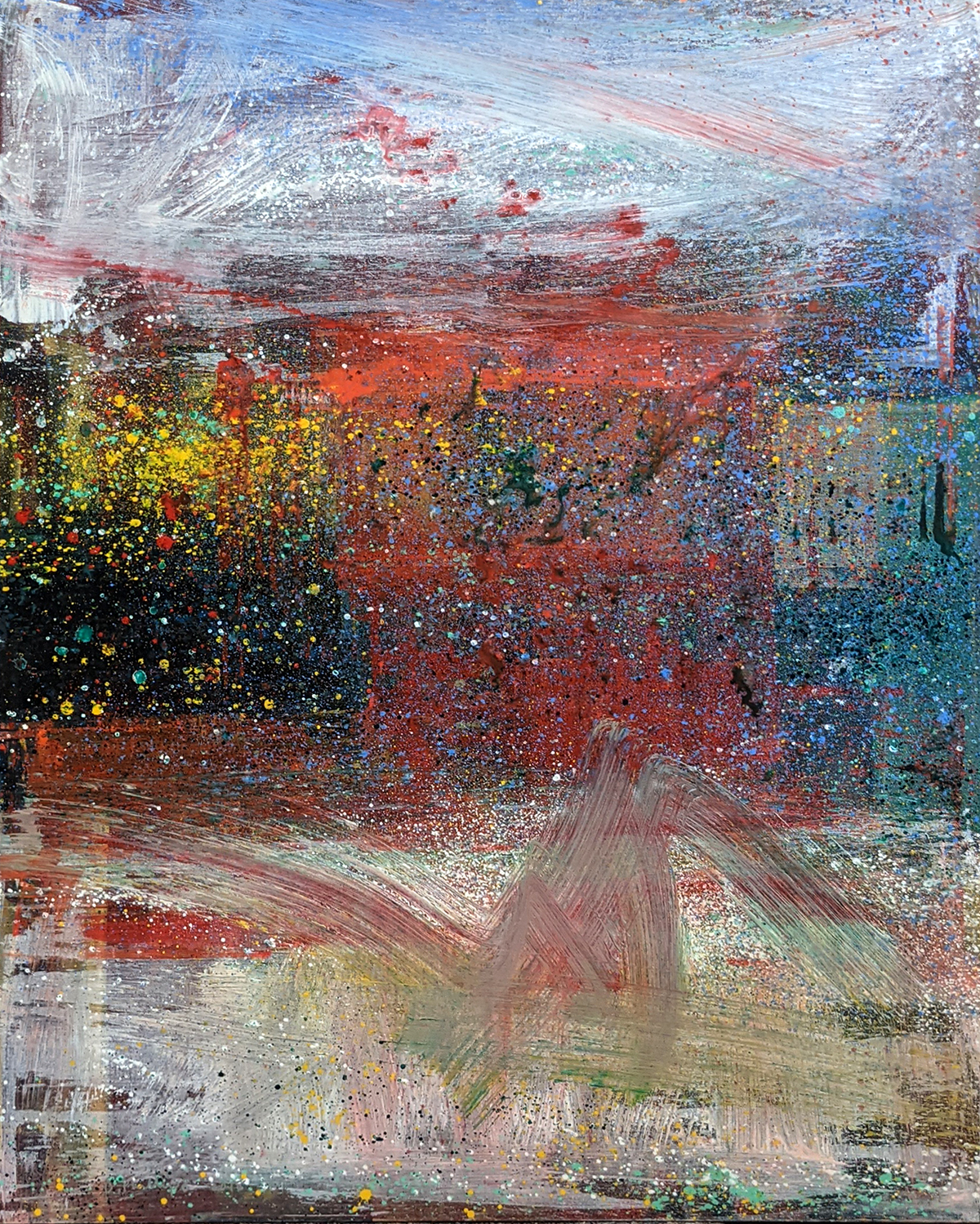
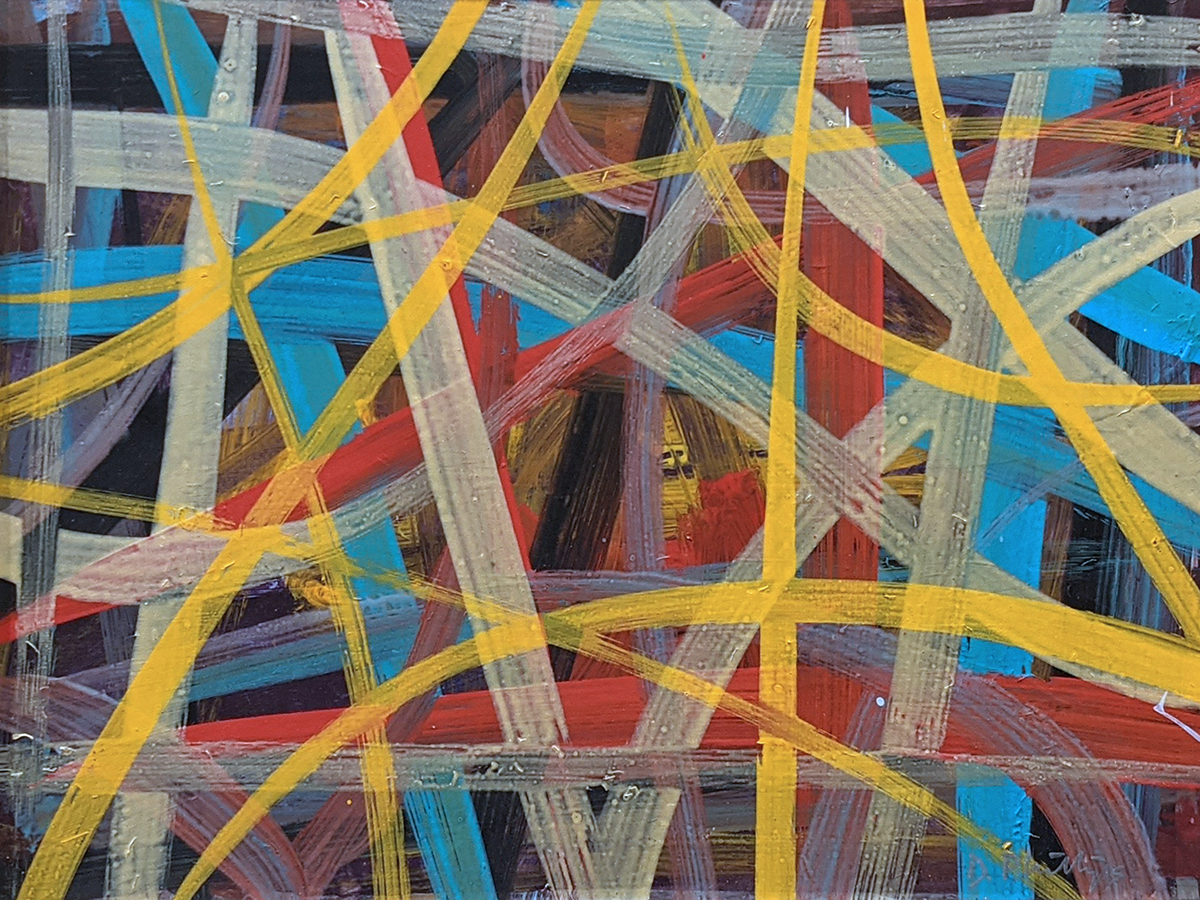
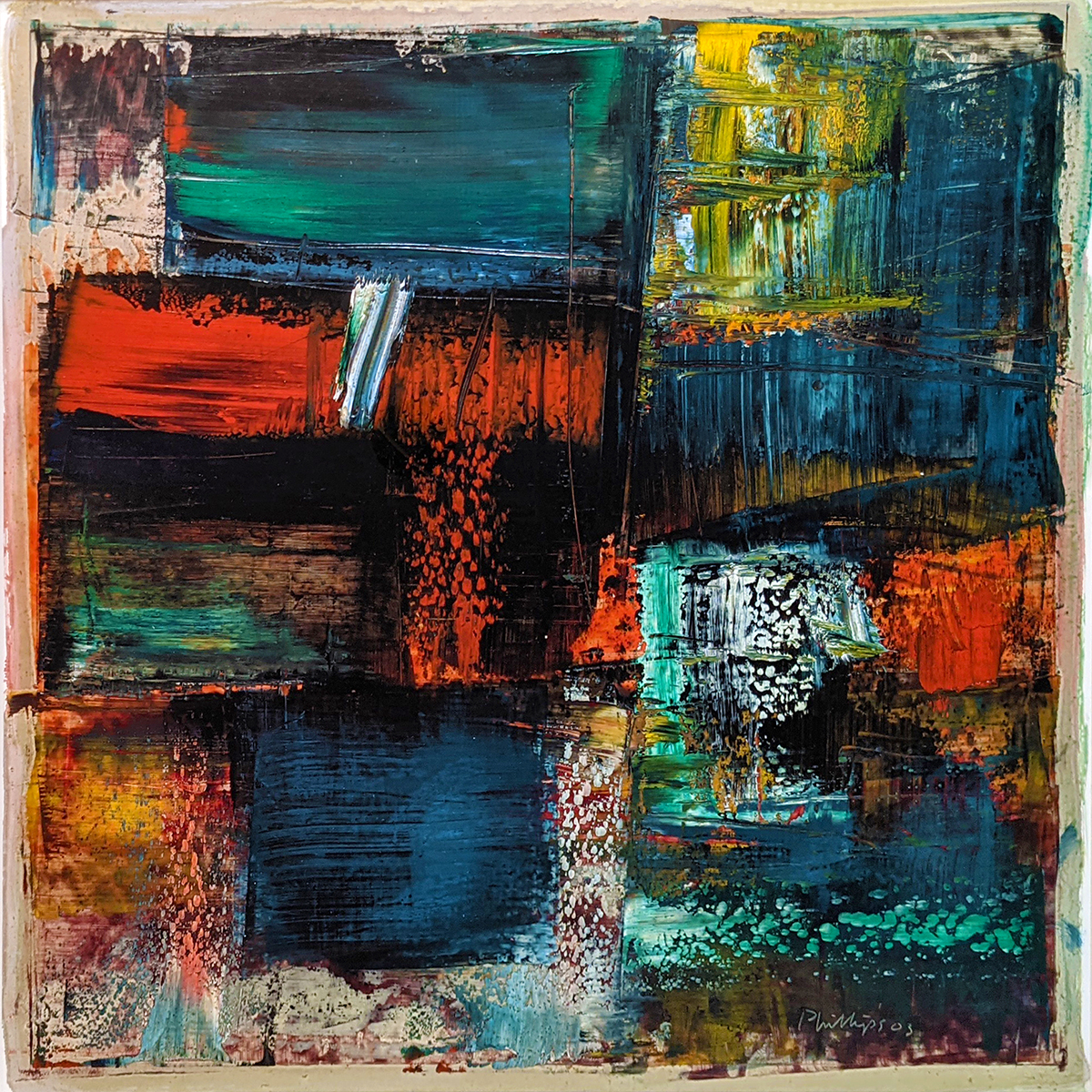
Phillips’ paintings done in an abstract expressionist vein correspond most closely to his process of creating music. While he does not consciously attempt to make his music visual or his painting lyrical, he sees both modes of expression as experimental and open-ended – the impulse of one sound or gesture suggests the next, unhampered by preliminary notations or sketches. “By starting a painting without direction, things happen that you may not anticipate,” says Phillips. “Abstraction allows your mind to wonder around and think things that may or may not be accurate.”
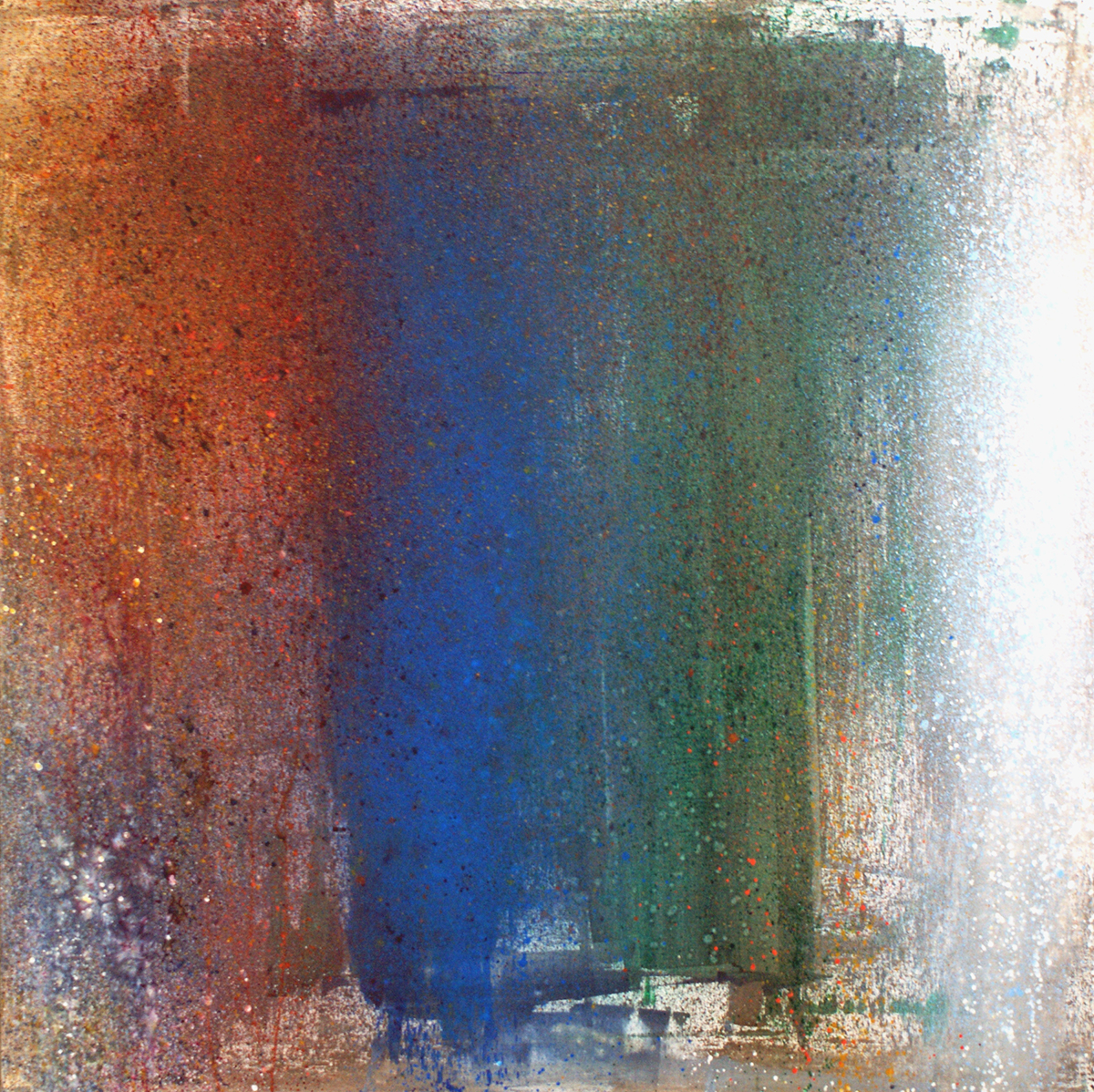
The artist delights in this spontaneous unknown, in the momentum of purely visual rendition. Some of the best abstract works emphasize color relations, while others are more concerned with the matters of shape and line. Some are cool, others are warm in tonality. Dark, brooding compositions contrast with those emblazoned in bright hues. All are boldly executed. Great swaths of acrylic pigment are overlaid in a succession of vigorous, multi-colored hatching, first horizontal, then vertical. Striking diagonals and geometric shapes punctuated with splashes, drips, and linear flourishes, make frequent appearances. In smaller works, such painterly gestures boil just below the surface of the canvas. In large scale, they explore and reverberate as if set loose from the confines of the two-dimensional format.
In contrast to the dynamic visual impulses captured in Phillips’ abstractions, his realistic landscapes are intimate studies of serene rural areas in Utah and southern Idaho. These reflect a completely different painting experience. The uninterrupted solitude of working location, and the formal discipline of relating to and rendering natural settings, are necessary and rewarding for Phillips. The landscapes are painted in oils, reflecting a slower, contemplative process, rather than quick-drying acrylics, whose more “reckless” application is preferred for the abstractions. A farm, a wayside village, or a strand of trees may be evident among broad fields, culminating in expanses of mountains or cloud-filled skies. A country road or stream often provides access to an unhurried journey into the scene. Its fluid path directs the eye toward the middle and distant grounds, lingering in the comfortable flow of rural hills, then moving to the impressive heights beyond.
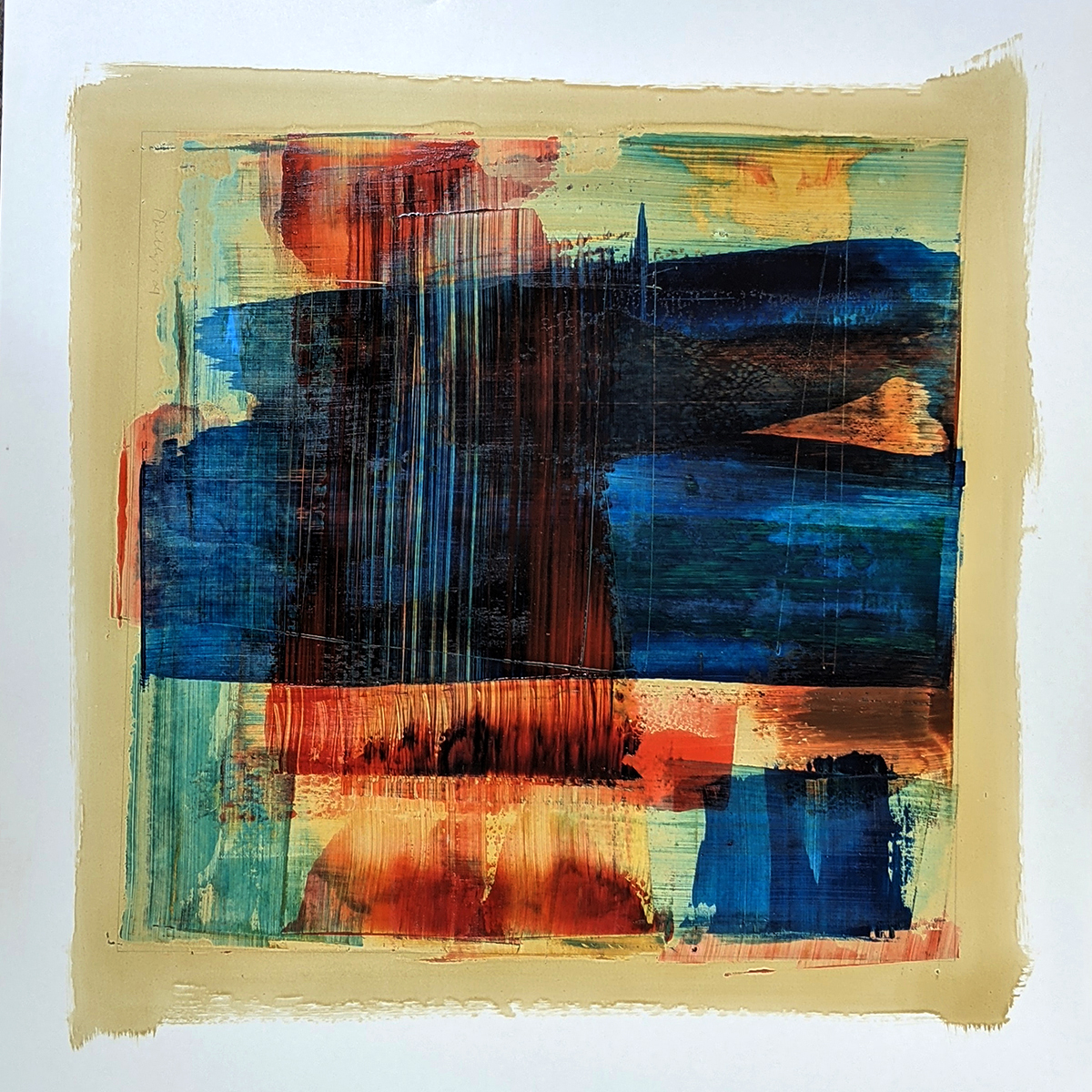
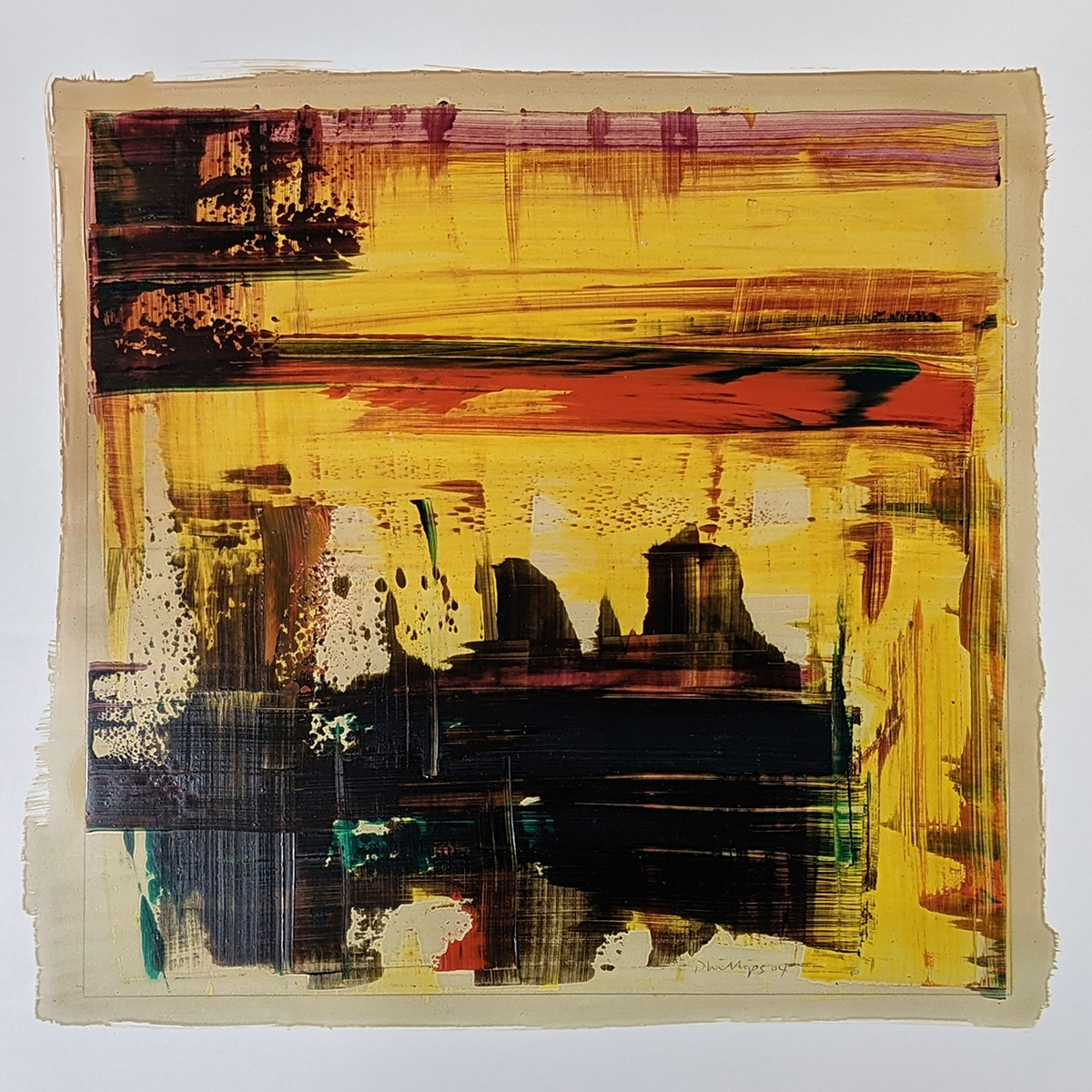
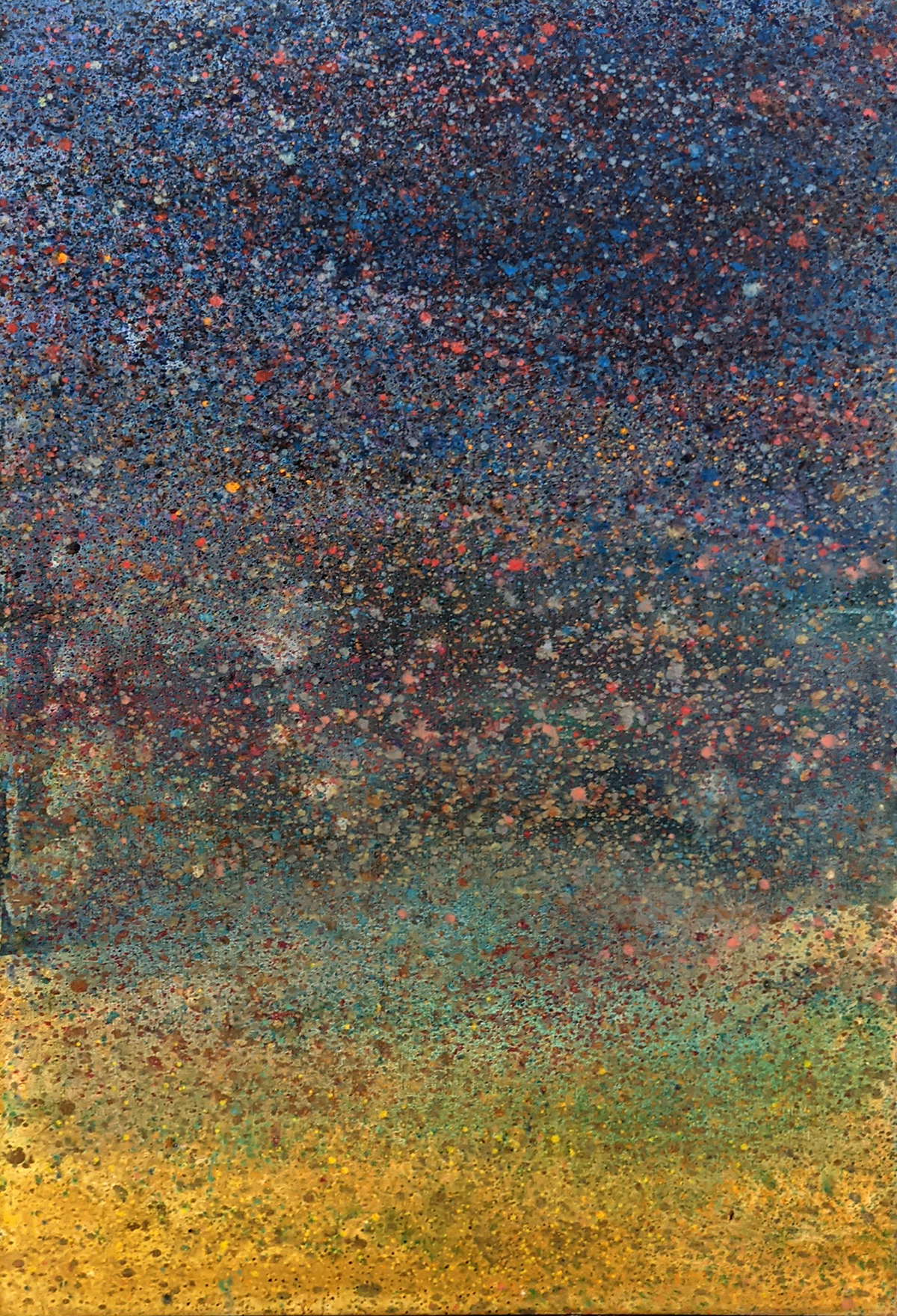
Drawing from the reserves of direct visual experience, seen in his representational work, as well as from the expressive potential of his pure abstractions, are Phillips’ abstract landscapes. Structurally these abstract views, painted in acrylic, include recognizable references to land, horizon, and sky. Yet in their lyrical handling, they portray a feeling, a memory of a particular moment and location. Here Phillips’ propensity for filling notebooks with sketches of ideas and landscape elements are an inspiration.
These paintings are reveries, exhibiting a tranquil power resplendent with mood-provoking ranges of glowing color. They are conceived from a bird’s eye point of view and are laid down in sweeping passages that imaginatively extend deep into pictorial space. Phillips’ reluctance to dwell on near elements is evident in the forceful diagonals that, moving into the distance, carry in their own wake suggestions of plowed fields, ribboned waterways, desert flats, and red rock. Patterned arcs of mountain forms are often held in the confluence of these diagonals. They culminate in the horizon, its atmospheric weight emphasized in wide, luminous bands of color and line. The artist’s fascination with the sky, as bearer of imminent thunderstorms or dramatic sunsets, fills more than half of these canvases. In contrast to the faceted articulation of landforms, the skies are broad essays in textures, tapestries of hatch marks joined in loose geometries of soft pastels or in dynamic masses of bold color that loom large over the land. In all, these are elegant statements of the expanse, grandeur, and formidable presence of land and sky.
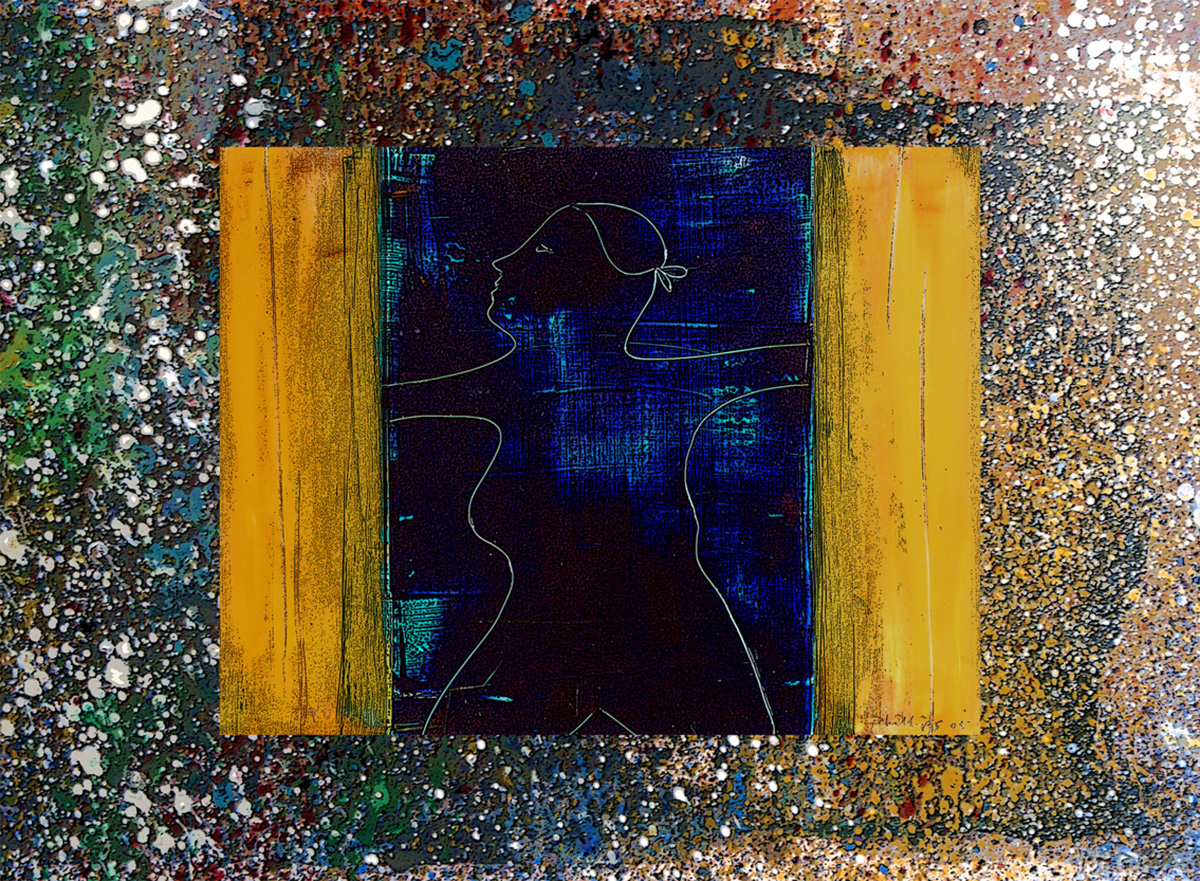
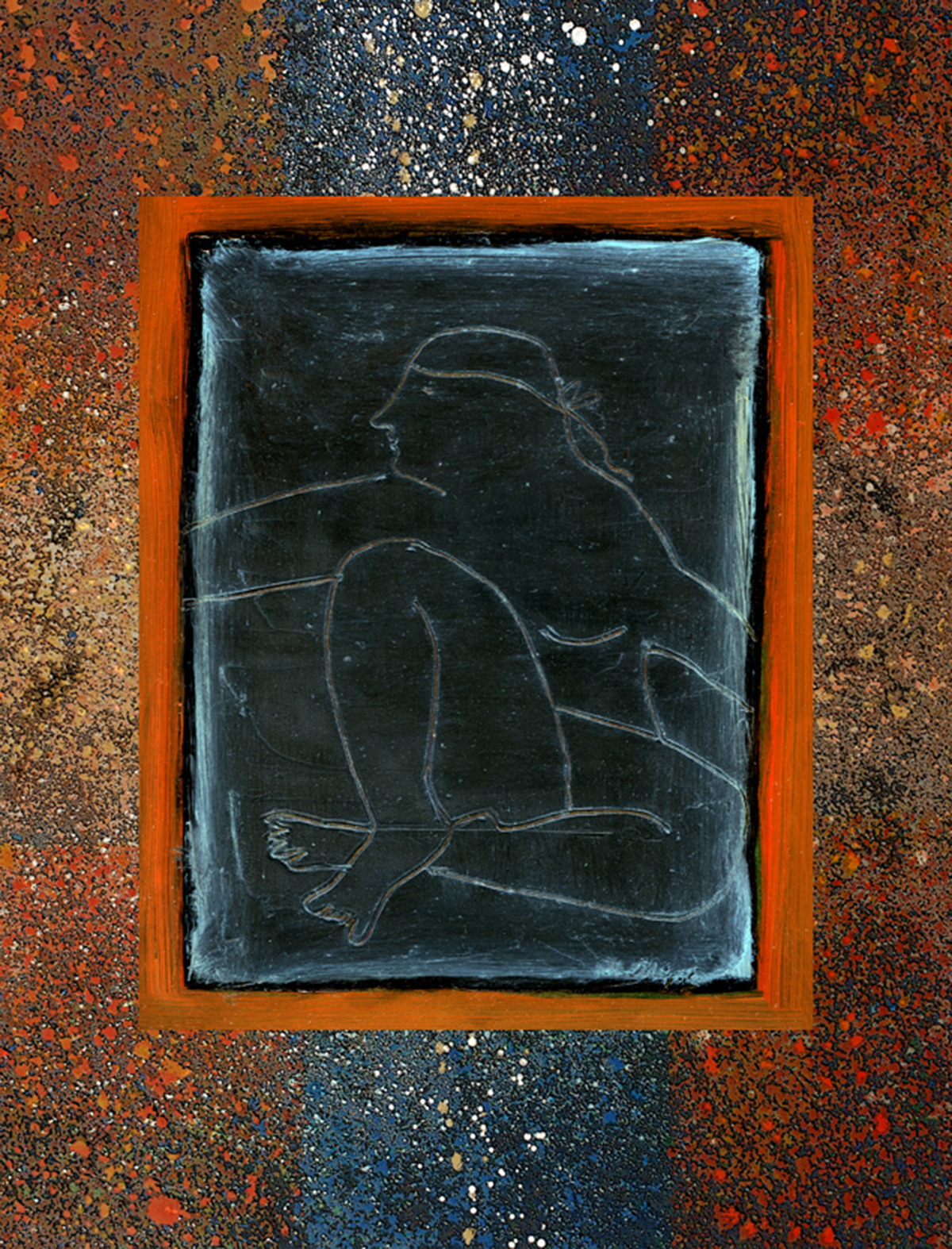
While the nonobjective paintings, realistic views, and landscape abstractions are the primary directions of Phillips’ work they are no means his only visual pursuits. Figurative painting and drawing, spray-paint renditions of common kitchen utensils, color-fields, and assemblages of found objects are additional subjects of interest. Like his musical “percussion drawer” filled with objects and instruments that anticipate an infinite array of rhythms, Phillips revels in variety. “I’m always wanting to paint something new”, he says. “I’m looking for a new color or new sound. Your constant quest for exploration, dealing with a new composition, it never seems to end. That’s what art and creativity are about.”
Denis Phillips was born in Salt Lake City, Utah, in 1938. He was one of a generation of dynamic students who experimented in both realistic and modernist styles at the University of Utah, where he received a Bachelor of Fine Arts degree in 1962. He has remained in Salt Lake City, developing his own talents and encouraging those of others, having taught courses at the Salt Lake Art Center, the University of Utah, and Westminster College. Over three decades, Phillips has exhibited extensively in the region and nationally. His paintings are included in many corporations and private collections.
.png)


.jpg)
.jpg)
.jpg)
.jpg)
.jpg)
.jpg)
.jpg)
.jpg)
.JPG)

.jpg)