[ B I O G R A P H Y ]
Melinda and Joseph Ostraff
Joseph was born in Santa Monica, California, spent his formative years in Laguna Beach, and now resides in Fairview, Utah, with his family. He holds an MFA from the University of Washington and currently serves as a professor of art at Brigham Young University. Joseph maintains a rigorous painting studio practice, complemented through partnerships and collaboration. His primary collaborator is his wife, Melinda, with whom he shares a studio. Melinda, who earned her PhD from the University of Victoria, BC, with a focus on Ethnobotany, has seamlessly integrated her expertise with Joseph's, resulting in a unique practice centered around the intersection of human geography and nature. Recently, Melinda and Joseph were featured on season one of the KBYU Artful Series. Joseph is a three-time recipient of the Utah Artist Fellowship, as well as a recipient of the Ballinglen Artist Fellowship in Ballycastle, Co Mayo, Ireland. Melinda teaches field botany at Brigham Young University. Over the past thirty years they have exhibited their art together at numerous national and international venues.
[ S T A T M E N T ]
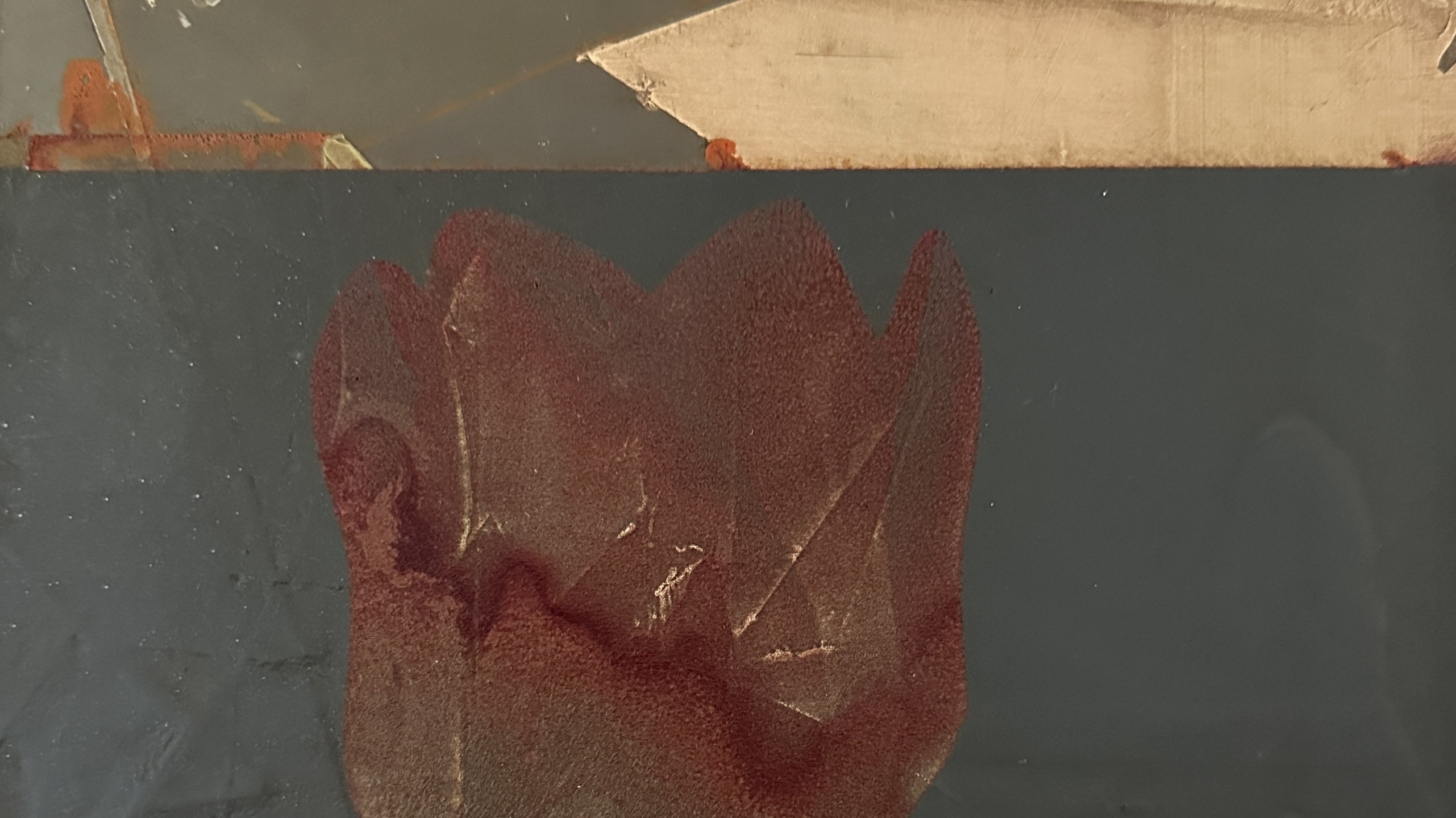
FLORALIS
Flowers may indicate mourning, memory, emotion, or prestige. They are present at weddings and funerals, at parades, and on certain holidays—sensual and symbolic, a mass-produced commodity of consumerism, globalization, and the fusion of high and low culture. From a botanical perspective, a flower, it’s color, and scent serve as attractants that guide perspective vectors for pollination or as a warning sign not to be eaten. Beyond their biological classification and purposes, flowers carry immense cultural meaning as each community and each generation redefines it’s meaning anew.
We are exploring the space between the biological functions of a flower and the human overlay of meaning, using our personal experiences as the foundation as we endeavor to contribute to a larger conversation. Our frequent travels provide opportunities and situations that demand our attention. Wherever we go, we make time to visit gardens and arboretums. These experiences serve as a catalyst for addressing a more encompassing question as we reflect on the cargo we carry, both inherited and chosen. While "cargo" typically denotes material belongings, here, we refer to the ideas and perceptions we carry with us wherever we go. This process is an exercise in becoming more mindful and intentional. The question takes various forms, such as asking what we think of flowers and how we came by that definition, but the underlying question remains constant: what will we choose to carry forward, and what will we leave behind?
These paintings are the residue and documentation of an internal experience filled with all kinds of questions.
.png)


.JPG)
.jpeg)
.jpeg)
.JPG)
.JPG)
.JPG)
.JPG)
.JPG)
.JPG)
.JPG)
.jpeg)